

If you've ever Googled your own name as a lawyer, you've probably seen a number next to your name on Avvo. The platform claims to have profiles for more than 97% of all licensed attorneys in the United States, and many of those profiles may exist before the attorney claims or completes them.
An Avvo Rating is a numerical score from 1 to 10 that Avvo assigns to attorneys based on publicly available data and profile information. It gives people a quick way to assess a lawyer's background.
Whether you've engaged with your profile or not, that score is likely shaping first impressions. This guide explains how the rating works, what it actually measures, and what you can do to manage it.
What Is an Avvo Rating?
An Avvo Rating is a numerical score between 1 and 10 that Avvo assigns to licensed attorneys in the United States. It’s calculated by a proprietary algorithm that evaluates information from attorney profiles and publicly available sources, including state bar records, years in practice, peer endorsements, professional achievements, and disciplinary history.
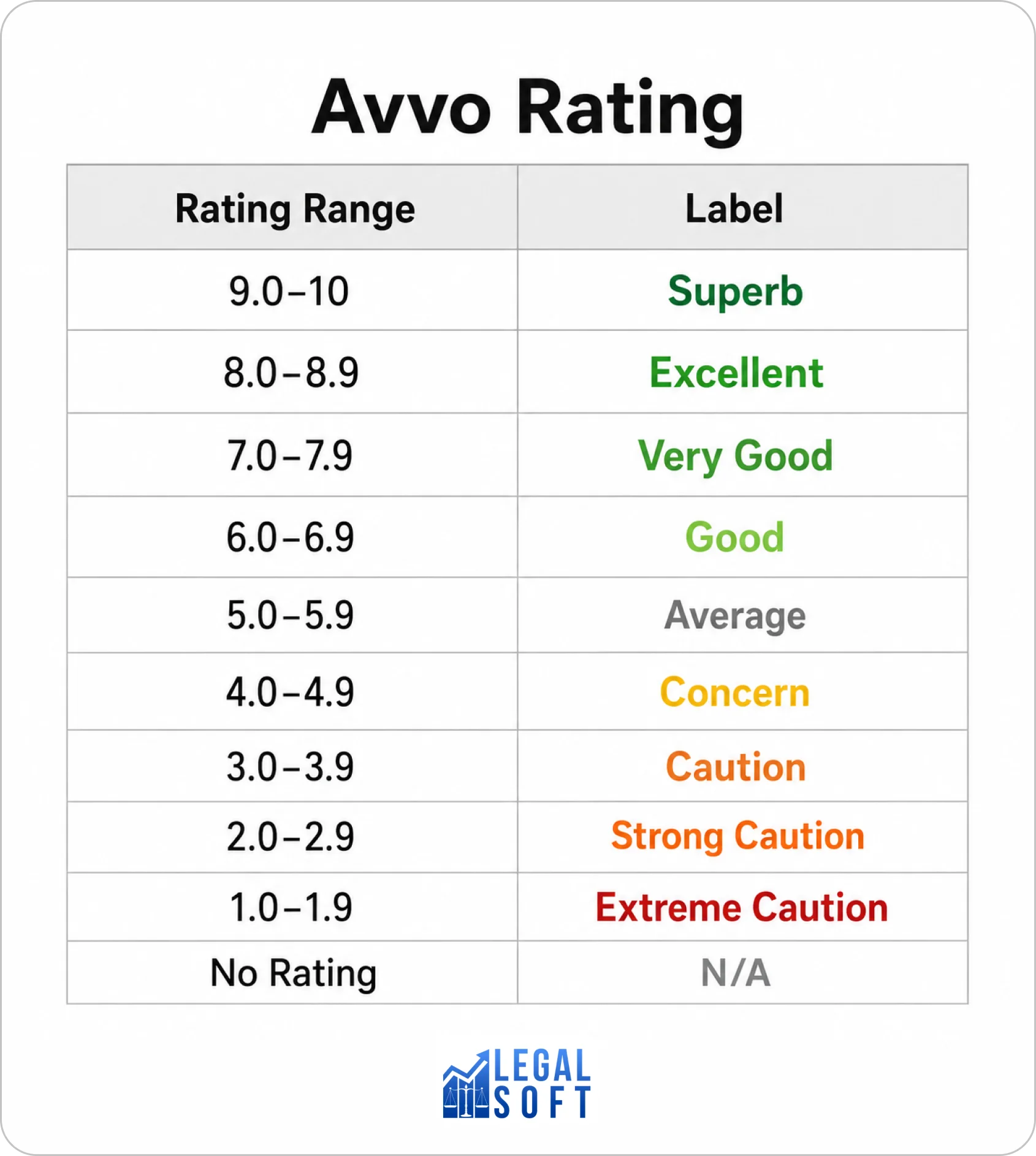
Here’s a quick breakdown of the Avvo rating scale:
Note on "No Rating": Avvo does not display a numerical score for unclaimed profiles. Instead, unclaimed profiles with no disciplinary record show "This attorney is not active on Avvo," while unclaimed profiles where the hidden score falls below 5 due to disciplinary history will display "Attention." In both cases, claiming the profile will trigger a numerical rating to appear.
What Is a Good Avvo Rating?
Avvo considers any score of 7.0 or above "good." A score of 9.0 or higher is labeled "superb" and is where most attorneys want to be. Realistically, a score of 8.0 or higher puts you in a category that reads well to prospective clients. A score below 5 is often a signal to potential clients that either the profile is incomplete or there is something in the attorney's record worth looking into.
Can ratings change over time?
Yes. Avvo updates ratings periodically as new information becomes available. According to Avvo’s Support Center, the weight given to certain disciplinary actions and industry recognition decreases over time, reflecting the view that more recent information matters most. Adding experience, receiving endorsements, or completing your profile can all cause your score to move upward as well.
What Does an Avvo Rating Mean for Lawyers?
An Avvo Rating acts as a quick credibility indicator that shapes how potential clients perceive a lawyer online. Higher ratings can support trust and make a profile look more complete, while a low rating, “Attention” label, or incomplete profile can make prospects hesitate.
Credibility
A high Avvo rating signals to potential clients that you have a solid professional background. Consumers often use it as a quick filter when comparing attorneys they don't know.
Because many users aren't equipped to read bar records or assess case history, a score of 9.0 to 10 tells them something positive without requiring research. Even at a glance, it can help position a lawyer as more established in a competitive market.
Visibility
Lawyers with strong Avvo profiles, especially those with complete information, peer endorsements, and a visible numerical rating, are easier for potential clients to evaluate. A “Superb” rating can also help the profile stand out visually when someone is comparing multiple attorneys.
In a crowded online space, being easy to assess matters. Having a complete profile gives prospects more reasons to click, read further, and decide whether to contact the lawyer.
Client perception
Many clients may interpret the Avvo Rating as a reflection of overall quality, even though Avvo says the rating only evaluates a lawyer’s background. It does not measure legal knowledge, past case performance, personality, or communication skills, but it can still become a shortcut for evaluating whether a lawyer is “good” or worth contacting.
According to BrightLocal’s 2026 Local Consumer Review Survey, 97% of consumers read online reviews for local businesses, and legal services are no exception. Whether or not the Avvo Rating is the best measure, it can still shape first impressions.
How the Avvo Rating Works
The Avvo Rating is built to give a quick, data-driven snapshot of a lawyer’s professional background. Rather than relying on a single factor, it combines multiple inputs to create a score that reflects both verified records and professional activity.
While the system is automated, it's not random. Each piece of information, whether from public sources or a lawyer's own profile, contributes to how the rating is calculated and updated over time.
How Avvo calculates ratings
Avvo uses a proprietary algorithm that pulls from multiple sources, but it does not publicly disclose the exact formula behind its ratings. Similar to how Google ranks websites without revealing its full algorithm, Avvo evaluates factors like experience, disciplinary history, and professional recognition to generate a lawyer’s score.
- Public data: Avvo pulls from publicly available records, particularly state bar data, to verify a lawyer's license status and standing. This includes whether the attorney is actively licensed, in good standing, or has faced any disciplinary actions. Any issues, such as suspensions or sanctions, can significantly affect the score, while a clean record helps support a stronger overall rating.
- Profile information: A lawyer's self-reported profile information also plays a major role in the rating calculation. This includes details like law school education, career history, and areas of legal practice, all of which help build a clearer professional narrative. The more complete and specific the profile is, the more accurately the algorithm can assess it.
- Professional achievements: Professional achievements help highlight a lawyer's recognition and contributions within the legal field. Awards, published works, and speaking engagements all signal a level of expertise and active involvement beyond daily practice. These accomplishments add depth to a lawyer's profile and can improve their standing in the rating system.
What Factors Affect Your Avvo Rating
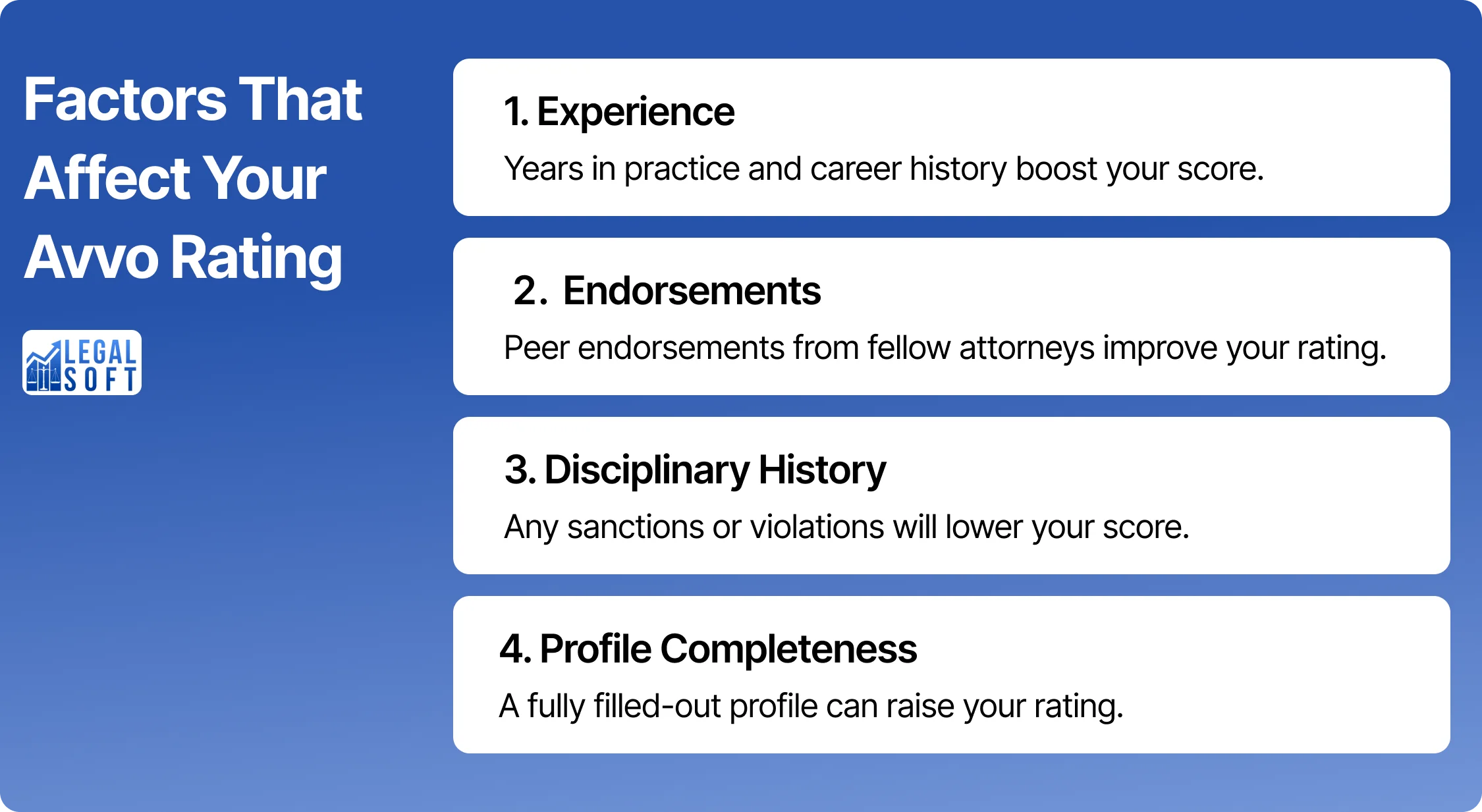
Avvo considers several profile and background elements such as:
Experience
Experience plays a central role in shaping an Avvo Rating, particularly in terms of years in practice and career progression. Lawyers with longer, more established careers often have an advantage because their professional history provides more data for evaluation. A recently admitted attorney will naturally start with a lower score that can improve over time.
Endorsements
Other lawyers can endorse a colleague on Avvo. These peer endorsements carry weight in the algorithm and can push a rating upward. Endorsements from attorneys in the same practice area tend to be treated as more meaningful.
Disciplinary history
Disciplinary history is a critical factor because it reflects a lawyer’s adherence to ethical and professional standards. Any sanctions or violations can lower a rating, as they raise concerns about reliability and conduct. Even minor or older issues may still have an effect, making a clean record important for maintaining a strong score.
Profile completeness
Profile completeness is one of the most controllable factors affecting an Avvo Rating. Adding your education, detailed work history, publications, and awards all contribute positively. Avvo's own guidance indicates that a complete profile can improve a score by several points.
Claimed vs. Unclaimed Avvo Profiles
Avvo creates a basic profile for nearly every licensed attorney in the United States, whether the lawyer wants one or not. These profiles pull from public bar records and exist by default.
An unclaimed profile is one the attorney has not taken ownership of. It typically has minimal information, and as a result, tends to generate a lower Avvo Rating. The lawyer has no control over what is displayed and cannot respond to reviews or add achievements.
A claimed profile gives the attorney full access to their listing. They can add their photo, bio, work history, awards, and respond to client reviews. Claiming a profile is free and almost always results in a higher rating simply because there is more data for the algorithm to work with.
If you have not claimed your profile, someone searching your name will likely still find it. Claiming your profile is free and it can be worth doing even if you don't plan to actively use Avvo as a marketing tool.
Does a High Avvo Rating Actually Matter?
It depends on how potential clients find you and what they do once they get to your profile.
For lawyers who rely on organic search traffic or directory referrals, Avvo visibility can affect how often you'll be contacted by new clients. FindLaw’s 2024 U.S. Consumer Legal Needs Survey shows that 82% of respondents who contacted an attorney after learning about them online used online reviews as part of their decision-making. Being well-positioned on Avvo with a strong rating means you show up earlier and look more credible at first glance.
That said, the Avvo Rating should be considered just one piece of the puzzle. It does not measure legal skill, case outcomes, communication style, or client satisfaction, factors that ultimately determine a lawyer’s effectiveness. While it can improve visibility and influence initial decisions, lawyers should focus on maintaining a strong professional reputation both online and offline, as the rating alone is not a guarantee of success or client satisfaction.
Pros and Cons of an Avvo Rating for Lawyers
Pros
- Third-party credibility. A high rating from an independent source carries more weight with potential clients than what you say about yourself on your own website.
- Free visibility. Claiming and completing your profile costs nothing, and the profile often ranks on the first page of Google for your name.
- First-page Google visibility. A well-maintained profile can appear in Google results for attorney-related searches in your area and practice area.
- Peer recognition. The endorsement feature lets colleagues publicly vouch for your work, which carries weight with some clients.
- Directory search ranking. Higher ratings appear first in Avvo's internal search results, giving you an edge over lawyers with lower or missing scores.
Cons
- Algorithm lacks full transparency. Avvo does not disclose exactly how ratings are calculated, making it difficult for lawyers to fully understand or predict their score. This can leave some users frustrated or uncertain about improvements.
- May not reflect actual legal skill. The rating focuses on credentials and profile information rather than real-world legal ability or case outcomes. A highly rated lawyer may not necessarily be the most skilled for a particular case.
- Can disadvantage new or less active profiles. Lawyers who are new to the platform or have minimal activity may receive lower scores despite strong qualifications.
- You cannot fully opt out. Avvo keeps profiles for licensed attorneys even if they would rather not appear. While you can claim and manage your profile, you cannot remove it entirely in most cases.
What are the Avvo Rating Limitations
Avvo Ratings can be helpful, but they’re not a complete measure of a lawyer’s ability or fit for a client. Because the score is based largely on available data and a proprietary algorithm, it may overlook nuances like real-world performance, client relationships, or niche expertise.
Several important qualities fall entirely outside its scope:
- Case outcomes: Avvo does not have access to win/loss records, settlement amounts, or any data about how cases actually resolved. A lawyer who has achieved major verdicts for clients will not see those results reflected in their score.
- Legal skill: The algorithm does not measure a lawyer’s technical ability, judgment, or strategic thinking in practice. It relies on verifiable information like education, experience, and achievements instead of evaluating how well a lawyer applies the law.
- Communication: How clearly a lawyer explains legal issues, responds to clients, or manages expectations has no direct effect on the score. One of the most common complaints clients have about lawyers is slow communication, yet it has no bearing on the score.
- Client satisfaction: The rating and the reviews are two distinct systems. Client reviews appear separately on Avvo profiles and are not factored into the numerical rating. A lawyer could have a 9.5 rating and three negative reviews, and the rating wouldn't reflect that at all.
How to Create and Claim Your Avvo Profile
Getting your Avvo profile set up is easier than it sounds, and claiming it gives you full control over how you appear online. Many lawyers already have a basic profile created from public records, but leaving it unclaimed limits both your visibility and your rating.
1. Visit Avvo and search for your profile
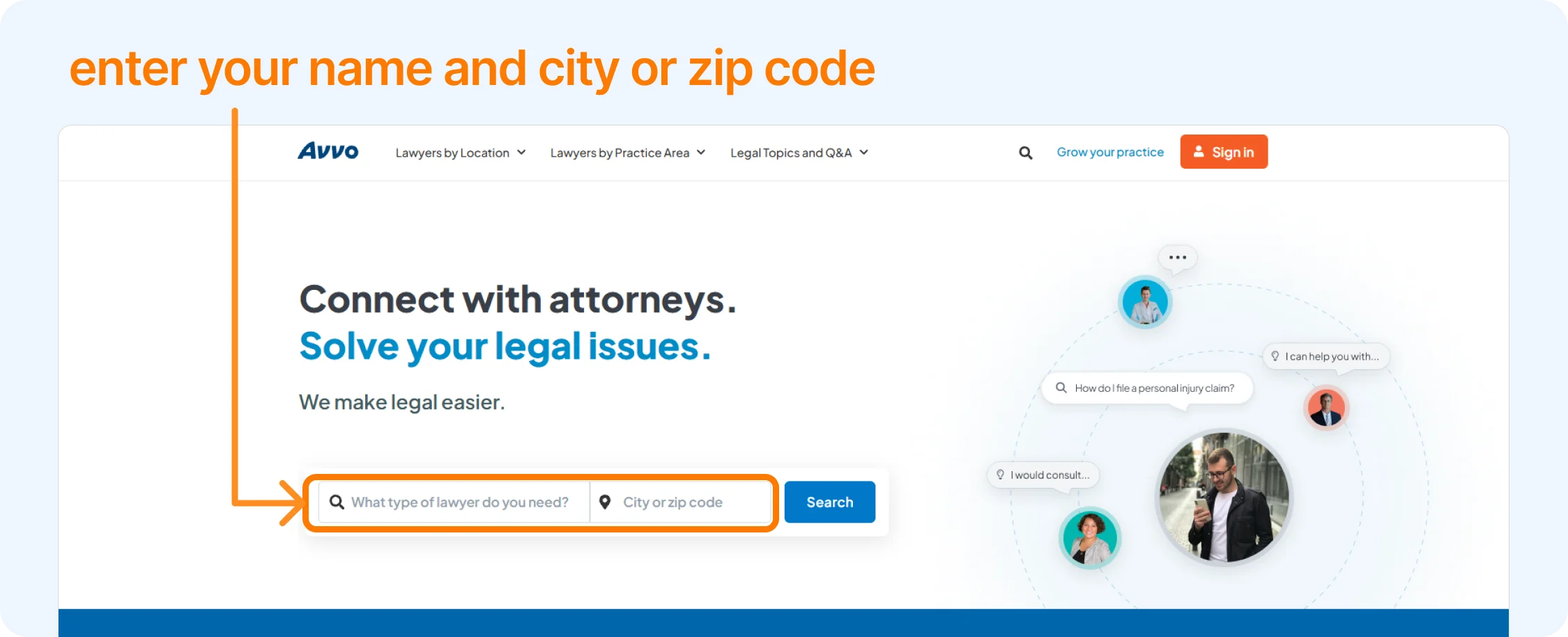
Go to avvo.com and enter your name and city or zip code. Avvo has likely already created a profile for you using bar registration data.
2. Click “Claim Profile”
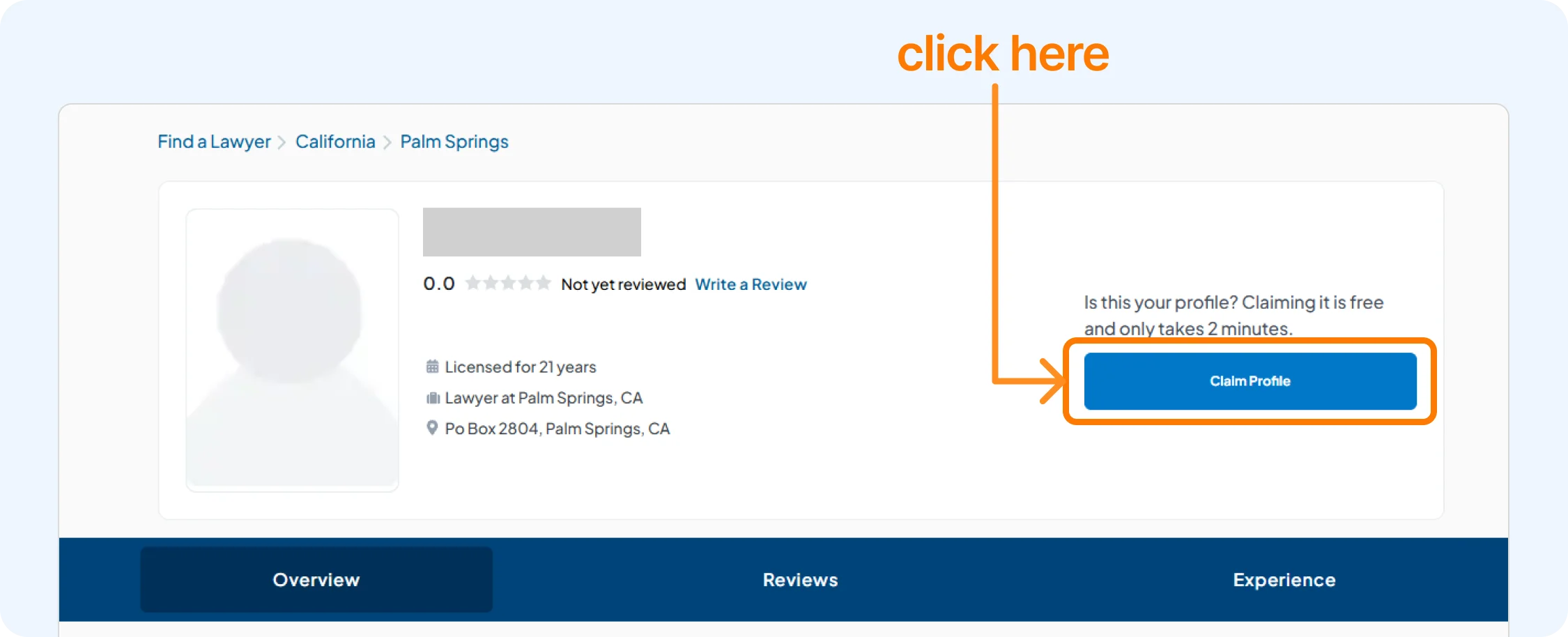
Once you locate your profile, click the “Claim Profile” button to begin the process that takes only 2 minutes. This step connects the listing to you and prevents others from making changes. If no profile exists, you can create one from scratch.
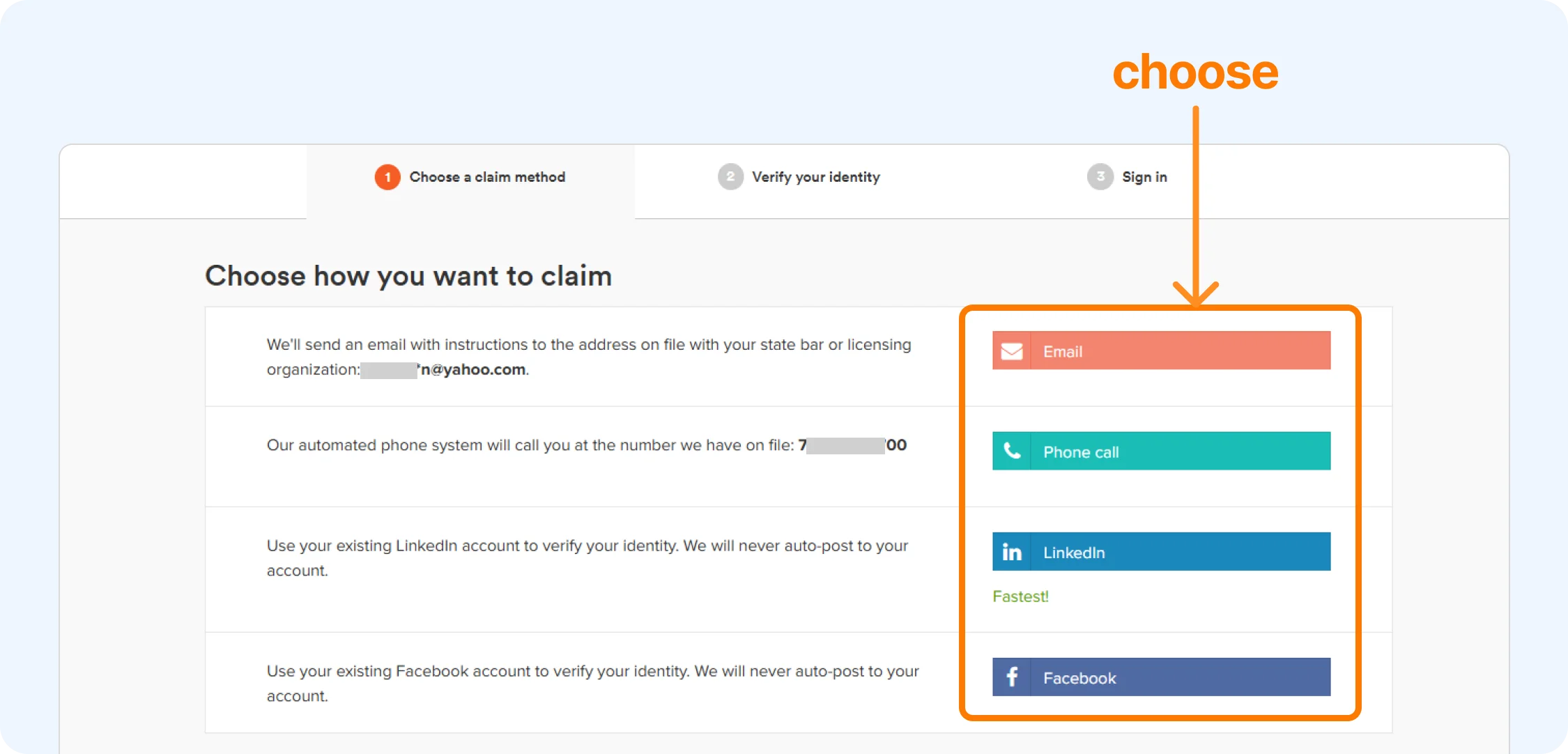
3. Verify your identity and bar credentials
Avvo’s claim process has three stages. First, choose a claim method, such as email, phone call, LinkedIn, or Facebook. Next, verify your identity and bar credentials so Avvo can confirm that you’re the rightful owner of the profile. After verification, sign in to access and manage your attorney profile.
4. Complete your profile details
Fill in available sections: professional photo, education, experience, awards, publications, practice areas, and a professional bio. The more complete your profile, the better the platform can evaluate and present your credentials.
5. Request peer endorsements
Reach out to colleagues you've worked with and ask them to endorse you on Avvo. This is one of the most accessible ways to improve your score.
6. Monitor and update
Set a reminder to review your profile at least twice a year. Add new achievements, update your experience, and respond to any client reviews that come in.
Note: Lawyers with unclaimed profiles do not receive a numerical rating. Claiming your profile is what triggers Avvo to display a score.
How to Improve Your Avvo Rating
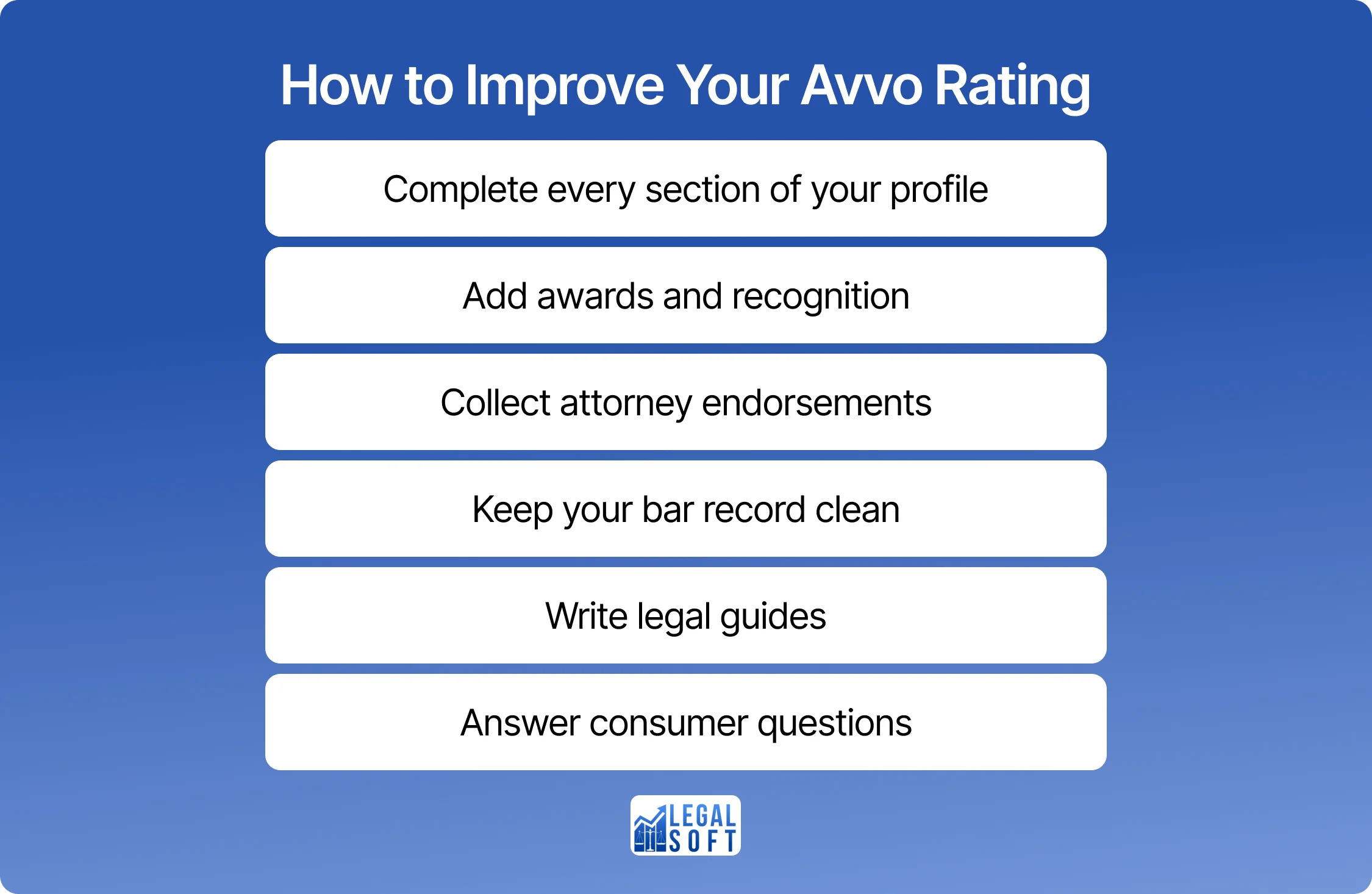
Improving your Avvo rating comes down to building a complete, credible, and active profile. The most effective ways to raise your Avvo Rating do not require paying for anything.
- Complete every section of your profile. Filling out all profile fields gives the algorithm more data to evaluate, which can boost your rating. A complete profile also makes your listing more professional and appealing to clients.
- Add awards and recognition. If you have been included in Super Lawyers, Best Lawyers, or received other professional recognition, add those to your profile. Avvo counts these credentials.
- Collect attorney endorsements. Ask colleagues, former classmates, or co-counsel to endorse your Avvo profile. Each one adds weight to your score. They need a claimed profile to do this, so send them the link.
- Keep your bar record clean. Disciplinary actions have an outsized negative effect. If you have a past issue, review whether it's accurately reflected in public records.
- Write legal guides. Short articles published on Avvo contribute to your profile completeness and show up in search results.
- Answer consumer questions. Avvo has a Q&A section where attorneys can answer legal questions from the public. Consistent participation over time does increase your rating incrementally, and the answers are indexed by Google.
Is the Avvo Rating Worth It for Lawyers? [Final note]
For most attorneys, yes, claiming and maintaining your Avvo profile is worth the time. Your profile exists whether you manage it or not, so it makes sense to ensure the information is accurate and the profile is complete.
While the rating can improve first impressions, it does not measure actual legal skill or case outcomes. A high score does not guarantee success in court, nor does it reflect a lawyer’s communication or client management abilities. The rating system has real limitations, and you should not let it become a primary measure of your professional worth.
Are You Ready to Handle What Comes Next?
A strong Avvo profile can bring more clients to your door. The real challenge is having the capacity to serve them well once they arrive. Legal Soft helps law firms improve operations by placing dedicated virtual legal staff who work directly with your team. From intake to case support, your practice gets the backup it needs.
Book a free consultation today.
Avvo Ratings FAQs
Do lawyers have to pay to create an Avvo profile?
No. Creating and claiming an Avvo profile is completely free, allowing lawyers to manage their basic information and presence. However, Avvo does offer paid services like advertising and premium features for additional visibility.
Does paid advertising on Avvo improve your rating?
No. Avvo has stated publicly that advertising on its platform has no effect on the rating. The score is generated by an algorithm based on professional data, and paying for placement does not influence it.
Does answering questions or writing legal guides increase your rating?
Avvo lists "legal thought leadership" as a factor in its rating model. Answering questions and publishing guides on Avvo demonstrate engagement and may contribute to your score, though Avvo doesn't publish the exact weight given to these activities.
Do client reviews affect the Avvo rating?
No. Client reviews appear on your profile separately and are not incorporated into the rating calculation. However, reviews are visible to anyone reading your profile, so they influence how clients perceive you even if they do not change the number.
Can a lawyer remove their profile?
Not entirely. Avvo does not remove attorney profiles because they are built on publicly available data. However, attorneys who have not been disciplined and are not seeking legal clients can request that their numerical rating be hidden. If approved, the profile remains visible but the score will not display, and the attorney will not appear in practice area search results.
Why do some lawyers have no rating?
Avvo only publishes a numerical rating for claimed profiles. For unclaimed profiles with no disciplinary record on file, Avvo displays "This attorney is not active on Avvo" instead of a number. For unclaimed profiles where a disciplinary action has pushed the attorney's hidden score below 5, Avvo displays "Attention." Claiming the profile in either case will trigger a numerical rating to appear.
Does Avvo show how ratings are calculated?
Only partially. Avvo publishes general factors it considers such as experience, achievements, disciplinary history, and profile completeness but does not disclose the exact formula or the weighting of each variable. The full algorithm remains proprietary.