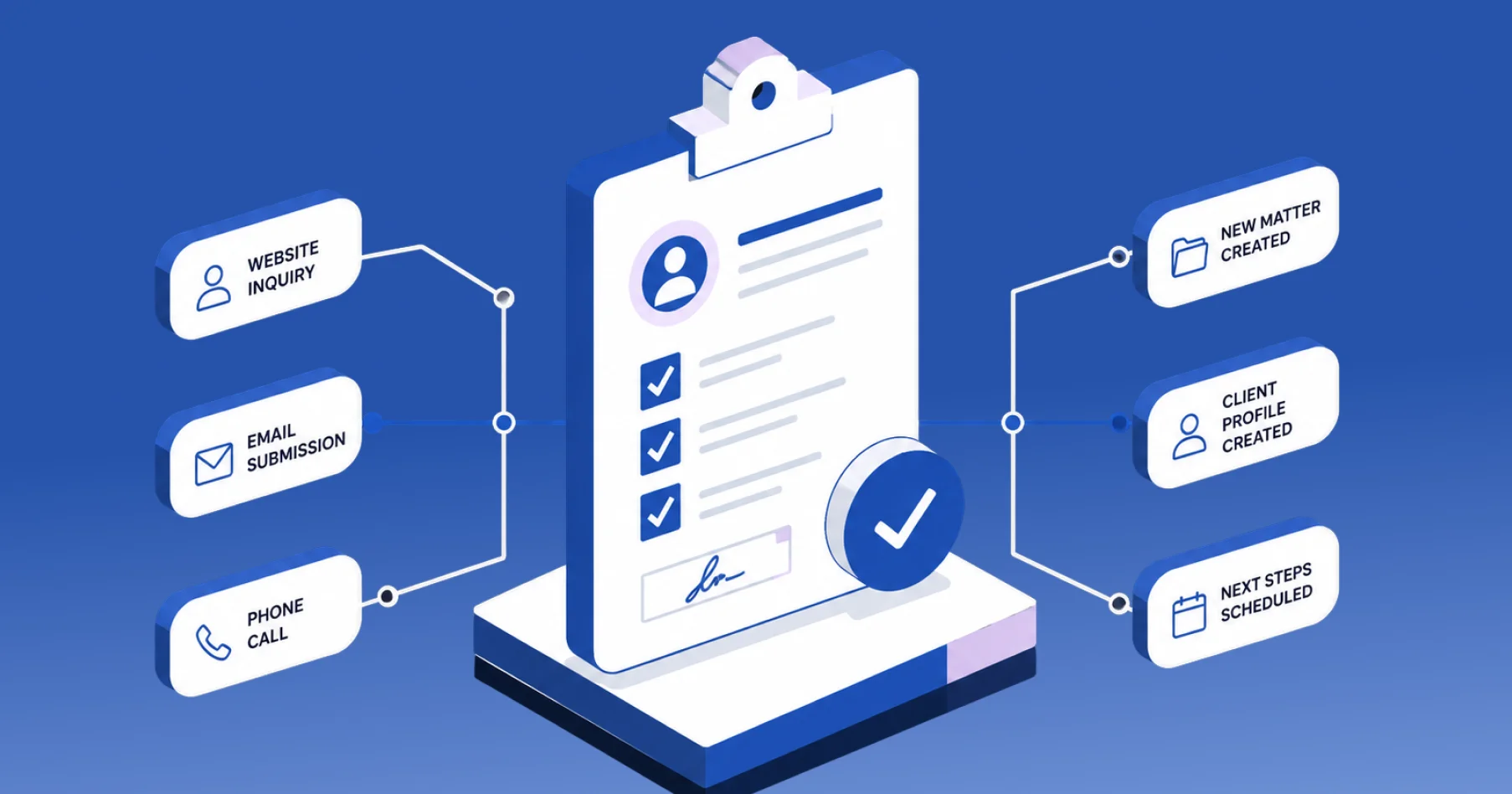

Client intake is the screening process for bringing new clients into a firm. It is quickly becoming the moment where law firms win or lose clients. Most firms still don't realize how much advantage they can get from something as simple as responding faster or putting the right tech behind their intake process.
While intake is often seen as just an onboarding step, it covers everything from the first call or form submission to the signed engagement. That early window is where potential clients decide whether to hire you.
The numbers below show what client intake looks like in 2026. From how fast firms respond to how often they miss calls, each statistic is backed by data and shows why intake is worth paying close attention to.
Key Takeaways
- Nearly 8 in 10 legal consumers expect a response within 24 hours after they contact a lawyer. (Clio)
- 68% of firms still leave intake to be handled by attorneys or paralegals already buried in casework. (CallRail)
- Phone coverage remains a major intake challenge, with prospective clients reaching someone by phone at only 52% of firms. (Clio)
- 97% of legal consumers who looked online for the attorney they contacted used a search engine. (FindLaw)
- An estimated 195 million calls go unanswered across the legal industry each year, resulting in nearly 13.6 million lost clients and $109 billion in lost revenue. (Oklahoma Bar Association)
- Firms with online intake tools see higher incoming client volume and revenue than firms that don’t use them. (Clio)
Lead Response Time and Follow-Up
Speed is one of the first things a prospect notices, and it's often what separates the firm they hire from the one they skip.
When someone fills out a form or calls, they're usually contacting several firms at once. The firm that responds first gets the first conversation, and often the case.
These stats show how much that response window matters, and where you can improve yours to win more of the clients you're already trying to reach:
- The most common reason legal consumers moved on after not hiring the first attorney was slow response. (FindLaw)
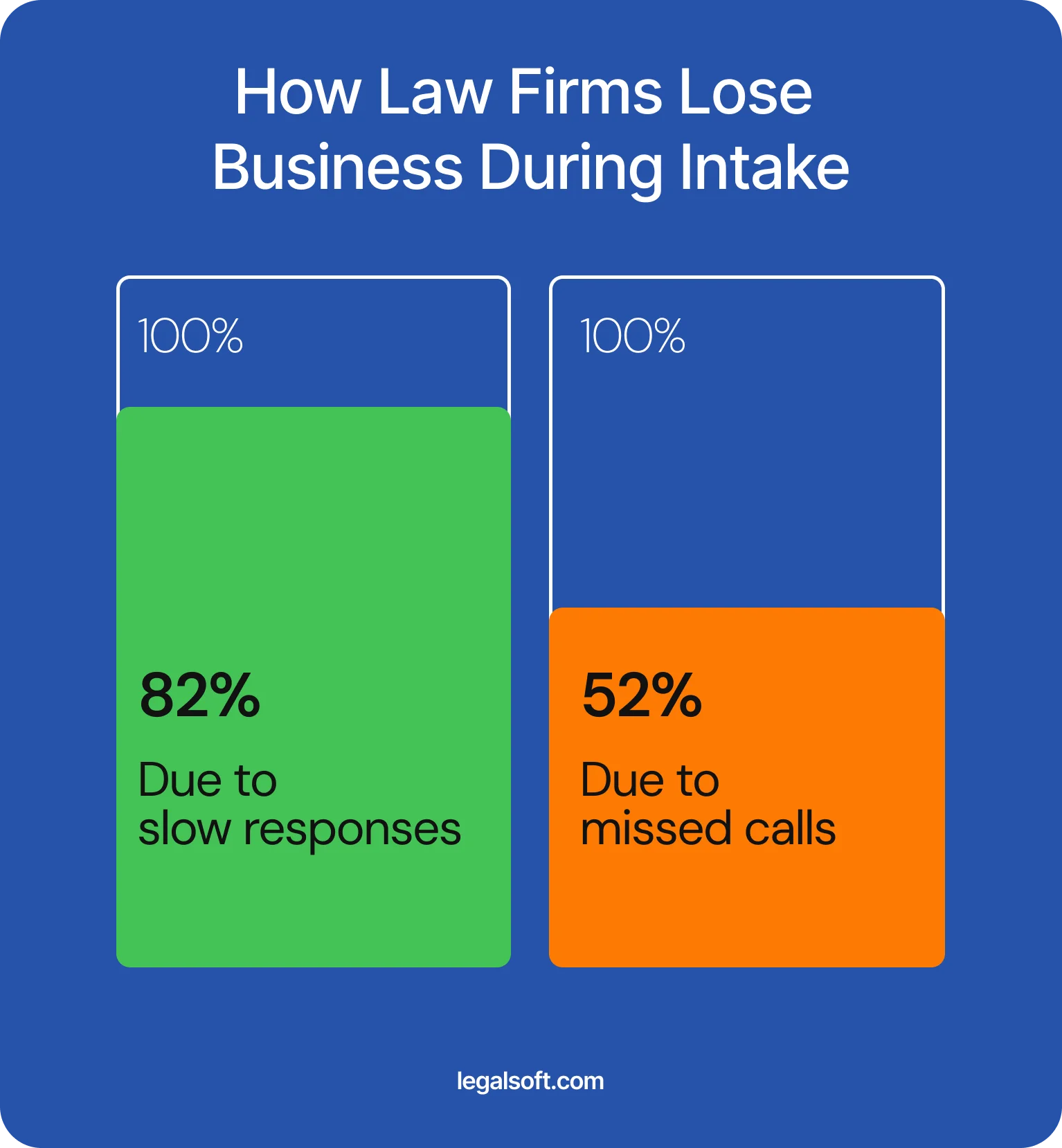
- 81% of law firms admit to losing business because of slow responses. (CallRail)
- Only 25% of law firms respond to online leads in under 5 minutes. (Hennessey Digital)
- 26% of law firms never respond to an online lead at all. (Hennessey Digital)
- 74% of law firms respond to online leads within seven days. (Hennessey Digital)
- Phone calls are the top response method, used by 87% of law firms responding to online leads. (Hennessey Digital)
- Louisville, Kentucky has the fastest-responding law firms, averaging under 1 minute, while Tallahassee, Florida is the slowest, with an average of 121 minutes. (Hennessey Digital)
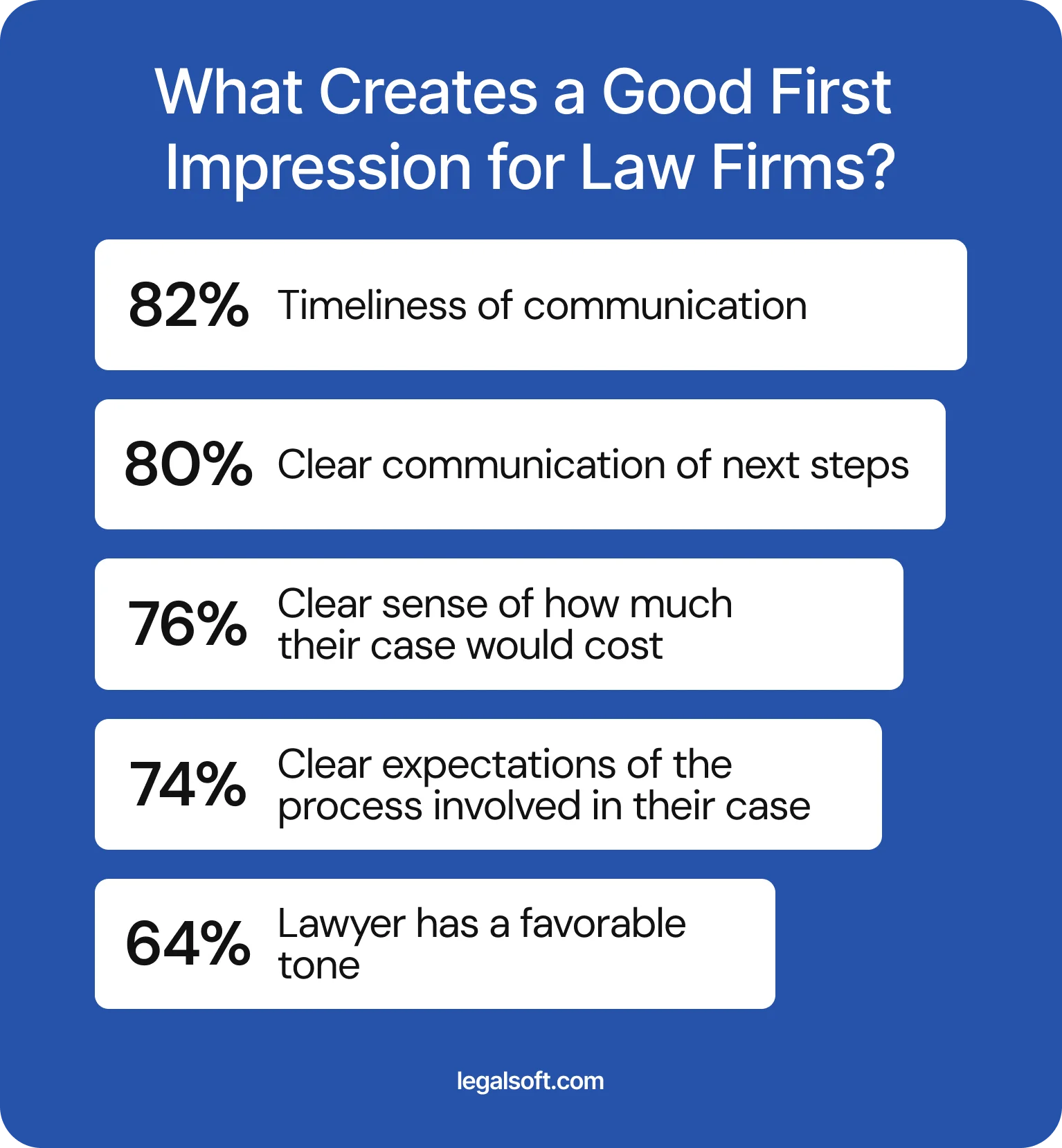
- 82% of legal consumers ranked timeliness of communication as an important factor when evaluating a lawyer or law firm. (Clio)
- 79% of legal consumers expect a response within 24 hours after contacting a lawyer. (Clio)
- 35% of law firms estimate they lost 11% to 25% of annual revenue because they couldn’t respond to leads fast enough. (CallRail)
- Contacting a lead within 5 minutes makes a firm roughly 21 times more likely to qualify it than waiting 30 minutes. (Harvard Business Review)
Intake Conversion and Performance
Responding fast gets a prospect in the door. Conversion is what turns that lead into a signed client. It takes a clear process that answers client questions, quotes a price, and explains what happens next.
The data shows most firms still drop the ball here. These numbers cover how firms handle that first conversation, and the revenue gap between firms that use intake technology and firms that don’t:
- Firms using client-facing intake technology earn twice as many leads and twice as much revenue as firms not using those tools. (Clio)
- Solo firms using e-signatures, online search ads, online schedulers, online intake forms, and text messaging reported 53% higher revenue, while small firms reported 28% higher revenue. (Clio)
- For solo and small firms, e-signatures improved conversion rates by 10%, and text messaging by 7% for solos and 3% for small firms. (Clio)
- In a secret shopper study of 500 law firms, Clio analyzed what it was like for legal shoppers to contact attorneys. After contacting firms, 73% of legal shoppers said they would not recommend the law firm they spoke with. (Clio)
- During phone consultations, only 41% of firms provided rate information, 12% could estimate total cost, and 36% explained the process and next steps. (Clio)
- In email responses, only 18% answered questions about next steps or expected costs, and just 2% referenced experience with similar legal situations. (Clio)
- Only 30% of shoppers could easily understand the process of hiring a law firm from the firm's website. (Clio)
- 68% of firms still rely on attorneys or paralegals to handle intake alongside their existing caseloads. (CallRail)
- Slow response to inbound inquiries costs the average surveyed firm an estimated 46 clients and roughly $200,000 in revenue per year. (CallRail)
- Attorneys and legal services had the highest average cost per lead of any industry in Google and Microsoft Ads in 2026, at $131.63. That is nearly twice the all-industry average of $66.69, so every unconverted lead is an expensive loss. (WordStream)
- The same paid search channel had the highest average cost per click at $9.87, compared to the all-industry average of $5.42. (WordStream)
- Paid search is the highest-converting channel for legal landing pages, with a median conversion rate of 8.3%. (Unbounce)
- The average legal landing page conversion rate is 6.3%, with subcategories such as family and disability law clustering around the same level. (Unbounce)
- Mobile drives roughly 7 times more traffic than desktop in the legal industry, making the mobile conversion experience decisive. (Unbounce)

Missed Calls and After-Hours Coverage
A missed call is usually a missed client. The phone is still where most legal clients start, and it's where a lot of firms lose them. More than half of firms admit they've lost work to a missed call, yet most have no coverage outside office hours.
These numbers show how often firms miss calls, who answers when they do, and the revenue lost across the industry:
- Prospective clients reached someone by phone at only 52% of firms. (Clio)
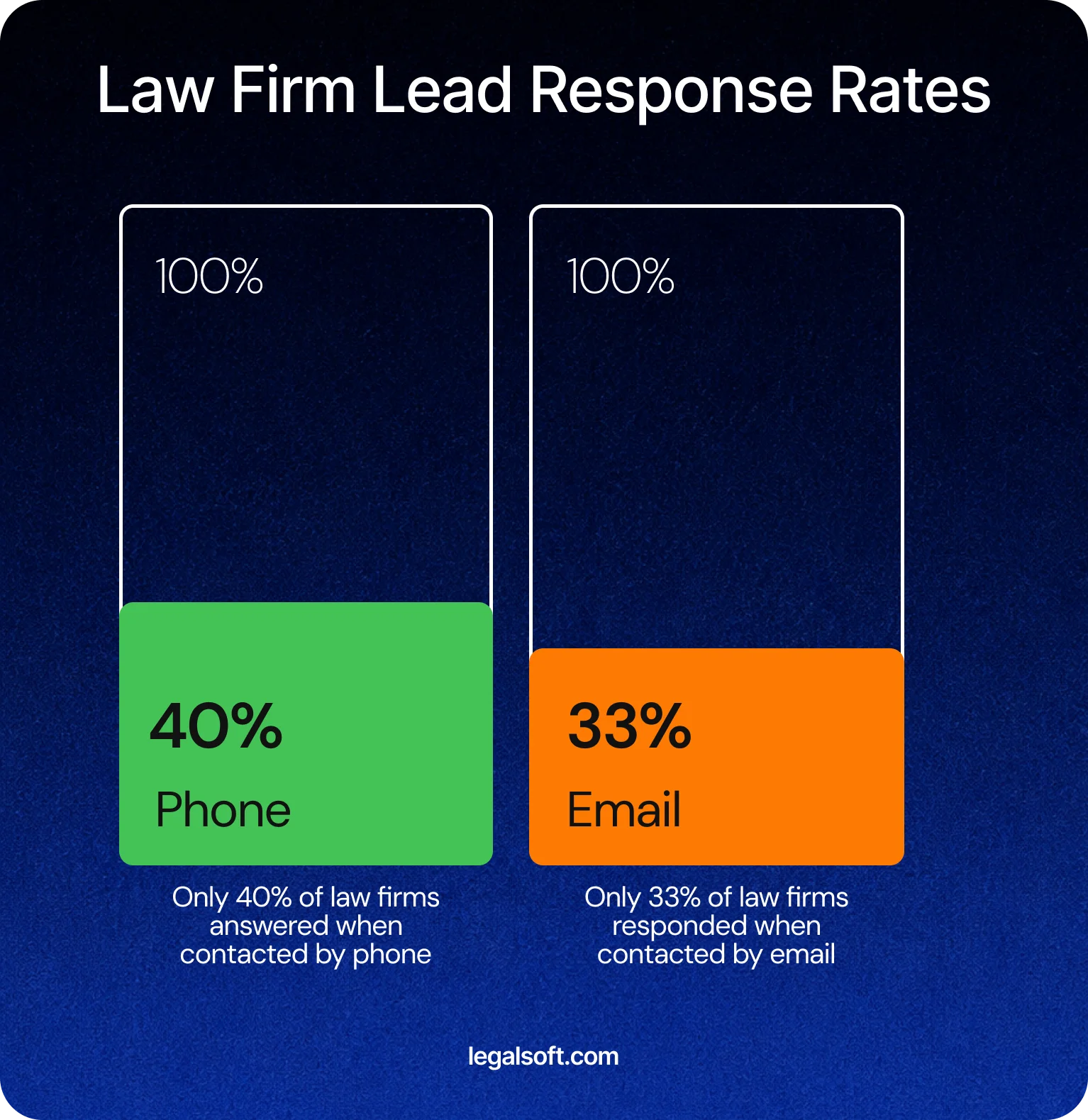
- Only 40% of law firms picked up the phone when called. (Clio)
- In total, 48% of law firms were unreachable by phone, even after shoppers gave them a chance to respond. (Clio)
- 52% of law firms say they have lost business because of missed calls. (CallRail)
- When leads call, only 43% of firms have the call answered by a receptionist, while 34% use an automated answering service and 20% send callers directly to voicemail. (CallRail)
- 97% of firms admit they "often" or "sometimes" prioritize existing clients over following up on new leads. (CallRail)
- Only 11% of law firms use virtual receptionists, despite missed calls being a major source of lost business. (CallRail)
- The legal industry has a 28% missed-call rate, the second highest among industries, behind healthcare. (CallRail)
- An estimated 195 million calls go unanswered across the legal industry each year. (Oklahoma Bar Association)
- Those missed calls are estimated to result in nearly 13.6 million lost clients and $109 billion in lost revenue. (Oklahoma Bar Association)
Those missed calls are happening across the industry, and most firms haven't connected them to the revenue they're losing.
Hiring a virtual legal intake specialist is an underrated solution to this problem. They understand legal workflows and serve as the main point of contact for prospective and existing clients.
Because they work remotely, you can hire someone to cover the hours your in-house team can't, including evenings and weekends.
Client Behavior and Expectations
Clients do research for lawyers and law firms before they ever call. They read reviews, watch videos, and form an opinion of your firm before they ever speak to anyone.
These numbers show how clients behave before and during the intake process. They can help law firms meet clients where they already are and create a better intake experience.
- 92.4% of legal consumers research their legal issue online before contacting an attorney. (Martindale-Avvo)
- 97% of legal consumers who used online resources to find the attorney they contacted used a search engine. (FindLaw)
- One in six legal consumers who searched for legal information online looked for online videos. Of those, 79% used YouTube, 69% social media, and 69% law firm websites. (FindLaw)
- 82% of legal consumers who contacted an attorney after learning about them online used online reviews as part of their decision-making. (FindLaw)
- Nearly 40% of legal consumers who used reviews said online reviews were their primary source of information when deciding which attorney to contact. (FindLaw)
- Client reviews are the single most influential factor in lawyer hiring decisions. (Clio)
- 80% of legal consumers ranked clear communication of next steps as an important factor when evaluating a lawyer or law firm. (Clio)
- 56% of people act within a week of realizing they have a legal need, and 16% act within a day. (FindLaw)
- 68% of legal consumers first contacted a lawyer or law firm by phone, compared with 25% who used email or an online form. (CallRail)
- 42% of legal consumers will choose the first lawyer they speak with if the lawyer leaves a good first impression. (CallRail)
Intake Forms and Channels
How you collect a client's information can affect whether they complete the intake process and move forward with your firm. Online intake forms, text messaging, and chat can all improve conversion when used well.
These data points show how intake tools and communication channels are being adopted, and what that shift does to conversion:
- 85% of law firms use intake software; of those, 65% say it helps them close more clients, 79% say it saves time, and 77% say it improves communication with existing clients. (CallRail)
- Firms that add online client intake tools see 50% more incoming potential clients and earn 50% more revenue on average. (Clio)
- For mid-sized firms, online intake forms improved conversion by 12% and shortened time to hire a law firm by 14%. (Clio)
- Online intake forms improved conversion rates by up to 5% for solo and small law firms. (Clio)
- 51% of clients find chatbots useful for exploring legal options, but 67% still want the ability to speak with a human when needed. (Clio)
- Among firms collecting client data through their websites, the most common fields are names at 90%, phone numbers at 73%, email addresses at 42%, and mailing addresses at 37%. (American Bar Association)
- 56.8% of law firms use contact forms to capture their leads. (PaperStreet)
- 27.3% of law firms feature active live chat on their website to engage visitors in real time. (PaperStreet)
Emerging Trends and Technology in Law Firm Intake
AI is becoming more recognized and widely used across many industries, and law firms are no exception. It already helps to improve legal tech and has been used in intake and marketing, mostly for lead scoring and campaign personalization.
- 68% of law firms using AI for marketing and intake said personalizing campaigns or customer experience is the top application. (CallRail)
- 55% of law firms using AI for marketing and intake said they use it for lead scoring or qualification. (CallRail)
- In independent testing, leading legal AI research tools returned incorrect information 17–34% of the time, showing why AI intake output still needs human verification. (Stanford)
The legal sector is heavily regulated, where accuracy is non-negotiable and accountability for every step stays with the firm. Whether a firm uses software or AI, the output still needs human oversight to make sure the process is handled properly.
Get intake support from Legal Soft
The pattern across all this data is simple. Leads come in, but many firms cannot respond fast enough, answer the phone reliably, or guide a prospect through the hiring process. When you look closer, many of these issues point back to staffing gaps.
Most firms lose clients because no one is available to answer the phone or manage the intake process. This is especially challenging for solo and small law firms, where attorneys are already handling casework but are still left to manage intake on top of everything else.
Legal Soft helps firms close those gaps. Our virtual legal intake specialists are trained in specific practice areas and work as a direct part of your team. They handle your full intake process from first contact to booked consultation.
If missed calls and slow follow-up are costing you clients, talk to Legal Soft to see how the right intake support can help.
FAQs
How fast should law firms respond to leads?
Contacting a lead within 5 minutes makes a firm roughly 21 times more likely to qualify it than waiting 30 minutes. However, only 25% of law firms respond to online leads in under 5 minutes, so most prospects are waiting longer than the ideal response window.
How many law firms miss calls from potential clients?
The legal industry has a 28% missed-call rate, the second highest of any industry behind healthcare. More than half of law firms say they have lost business because of missed calls, which means a lot of would-be clients are reaching another firm before yours ever calls back.
Do online intake forms increase conversion?
Yes. Firms that add online intake tools see 50% more potential clients and 50% more revenue on average. Online intake forms also make it easier for prospects to submit their information, helping firms capture leads even when no one is available to answer right away.
How do most clients find and contact a law firm?
Most legal consumers research their legal issue online before contacting an attorney. Among those who found their attorney online, almost all used a search engine. Many still make first contact by phone, which makes both online visibility and phone response important parts of the intake process.