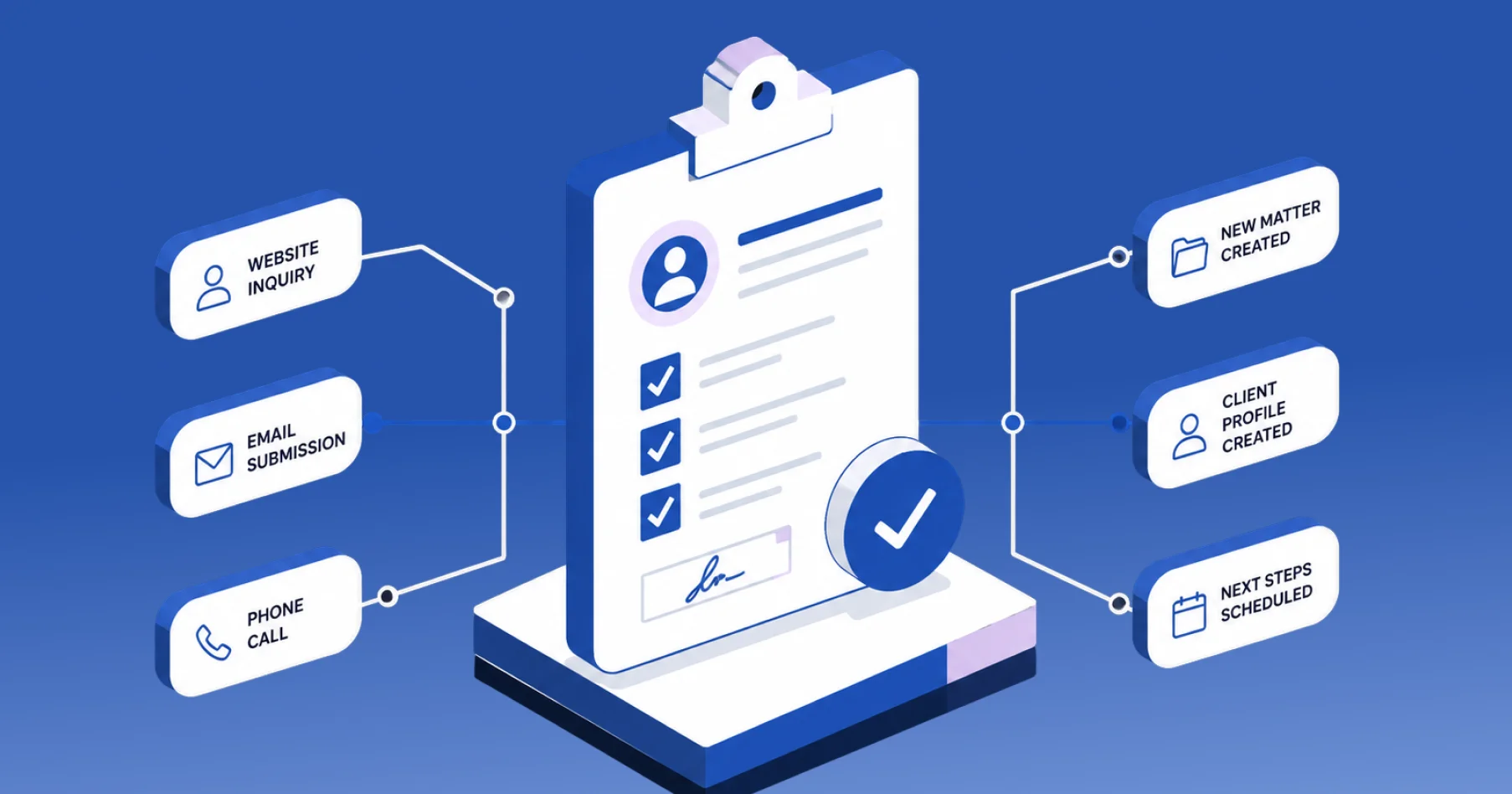

From the very first interaction, impressions matter in the legal world. The moment a potential client reaches out to your firm, your law firm client intake form begins shaping their experience and expectations. Whether you're a solo attorney or part of a growing firm, the way you start your engagement impacts trust, client satisfaction, and case outcomes.
A well-designed legal client intake form does more than collect information. It helps firms build the foundation for strong attorney-client relationships, streamline workflows, and target the right clients for profitable growth.
This important step allows law firms to gather all the necessary information to determine if a prospective client is the right fit, let you understand the legal matter at hand, and ultimately provide the best possible service.
In this guide, we’ll cover everything you need to know about creating effective client intake forms, including key elements, best practices, and tools to help you optimize your client intake process.
Law Firm Client Intake Form Template
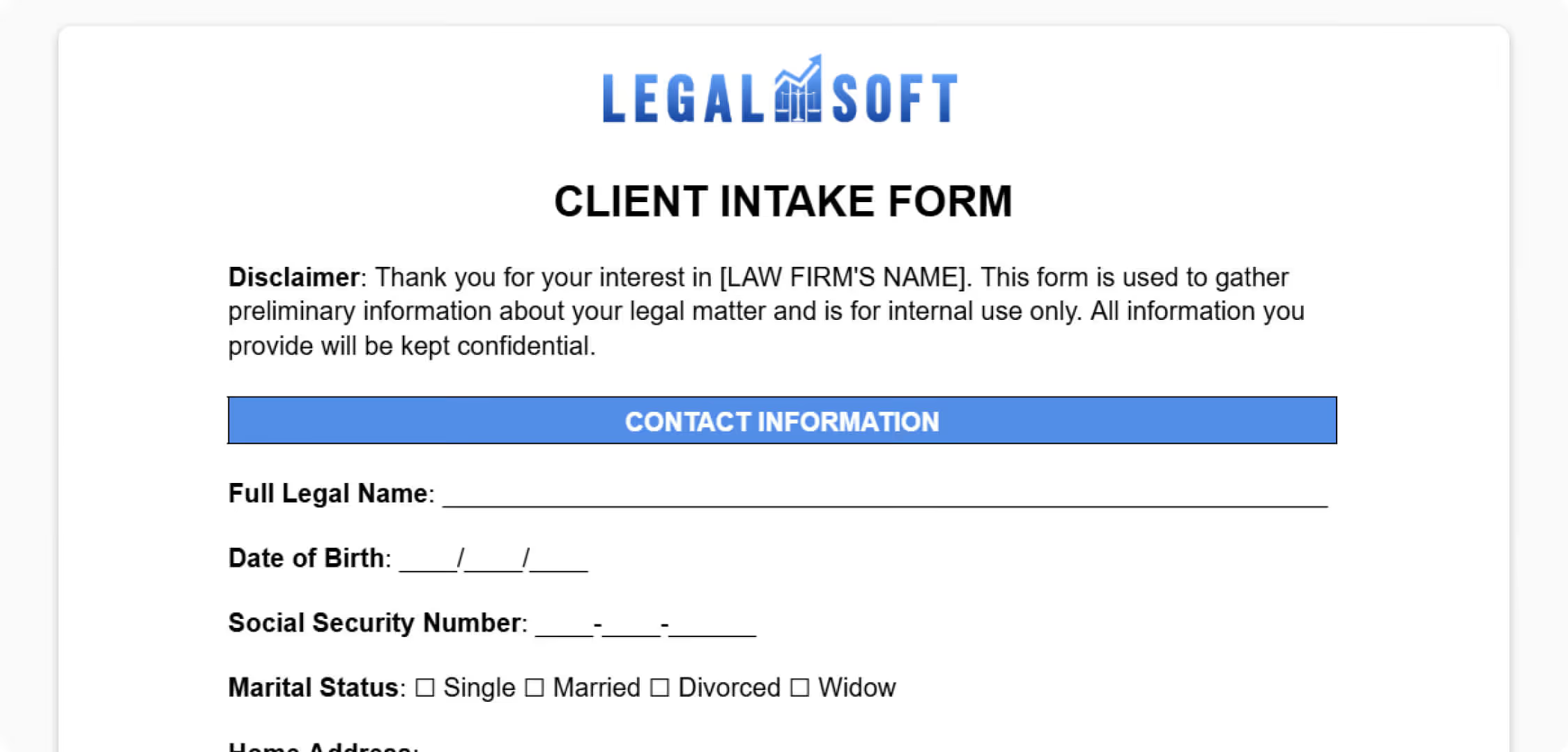
A standard template should serve as a foundation that you can fine-tune based on your specific needs. This template includes sections for client contact information, case details, opposing parties, and consent acknowledgments. Here is a client intake form template you can customize:
What Is a Legal Client Intake Form?
A legal client intake form is a questionnaire used by law firms to collect important information from potential clients before their first consultation. These forms typically gather details such as contact information, the type of legal issue, prior legal history, and preferred communication methods.
Intake forms can be completed on paper or online and are often customized to a law firm’s specific practice area. The primary goal is to collect enough information to serve multiple purposes:
- determine if the case is a good fit for your firm,
- identify any immediate conflicts of interest, and
- prepare for the initial consultation.
When designed effectively, a legal client intake form helps define the client’s needs and guides your next steps in delivering legal support.
What to Include in a Legal Client Intake Form
A strong legal intake form should include the following elements:
- Basic contact information – Full name, date of birth, employment, phone, email, address, and marital status.
- Case information – Type of legal matter, case details, important dates, and any previous counsel consulted.
- Practice-specific details – For example, personal injury cases may require injury type, treatment received, and insurance information.
- Conflict check – Names of involved parties to screen for potential conflicts of interest.
- Financial background – Relevant for determining case viability and fee options.
- Preferred communication – Best times and methods to contact the client.
- Acknowledgment – Client signature confirming information accuracy and that no attorney-client relationship exists until a written agreement is signed.
Whether you work with criminal defense lawyers, family attorneys, or corporate counsel, every legal professional benefits from intake forms that are simple to complete and easy to review.
Tip: Keep required fields to a minimum. The fewer mandatory fields, the higher the completion rate of your intake forms. You can always gather additional details during the consultation.
Customizing Client Intake Forms by Practice Area
Generic intake forms work for general inquiries, but practice-area-specific forms allow firms to ask targeted questions that improve screening and case evaluation. Below are examples of how different practice areas can customize their intake forms:
The information collected through intake forms is used to create a client profile and guide early legal decisions. These forms are especially useful for service-based businesses like law firms that manage ongoing client relationships.
Best Practices in Designing a Client Intake Form

To achieve higher completion rates, make the intake process as smooth and user-friendly as possible. When creating your legal intake form, consider the following best practices:
- Organize by section. Group related questions together using clear headings so clients can easily follow the flow of the form.
- Optimize for mobile. Many clients complete intake forms on their phones, so ensure your form is mobile-responsive and easy to navigate.
- Avoid legal jargon. Use clear, simple language to prevent confusion and reduce form abandonment.
- Give clear Instructions. Don't assume clients know what information you need or why. Include brief explanations for questions that might cause confusion.
- Keep it short. Limit your initial intake form to essential information only. You can gather additional details during the consultation or through follow-up forms after engagement.
- Provide privacy assurance. Prospective clients are sharing sensitive information. Include a clear privacy statement explaining how their data will be protected and used.
- Enable autosave. Autosave prevents the loss of information during longer forms and improves the overall user experience.
- Set expectations. Add a brief note explaining the next steps and when the client can expect to hear from you.
Benefits of Online Intake Forms
Paper forms have their place, but online intake forms offer advantages for law firms including:
Accessibility
Online forms allow potential clients to complete intake forms anytime, anywhere. Prospects visiting your website can submit their information immediately instead of waiting for business hours.
Convenience
Online intake forms make it easy for potential clients to get started on their own schedule. Clients can complete forms at their convenience without the need for phone calls or office visits.
Automated data entry
Digital intake forms can automatically populate information into your practice management system or CRM, centralizing client data in one secure, searchable location.
Faster response times
When intake information arrives digitally, your team can review and respond more quickly. Automated notifications alert staff to new submissions, while built-in routing sends inquiries directly to the appropriate attorney.
Improved completion rates
Digital forms can include progress indicators, save partially completed responses, and send reminder emails, making it easier for clients to complete the intake process.

Why Legal Client Intake Process Matters
The legal client intake process refers to the structured system of attracting, communicating with, and evaluating prospective clients before they officially become new clients. It starts at the first interaction—often through a referral or a client intake form—and continues through onboarding.
A thorough intake process helps law firms determine whether a case is the right fit for their services while identifying potential conflicts of interest early. With a structured approach, law firms can improve client relationships and deliver better legal services.
The five core steps of client intake process
- Attract potential clients: Your law firm should ensure its brand, practice area content, and digital presence appeal to the right audience.
- Capture contact information: Use a responsive client intake form that collects contact details, case details, and important information.
- Follow-up communication: Timely follow-ups are key for securing new clients and reinforcing your firm’s responsiveness.
- Schedule the initial consultation: During the consultation, gather detailed case information, discuss client goals, and evaluate potential conflicts.
- Onboard clients: Set clear expectations, outline fee agreements, and introduce your services to create a smooth onboarding experience.
Tools to Build Your Legal Client Intake Form
You don't have to manage this manually. You can build online intake forms for your law firm using tools like:
- Clio Grow: Legal-focused CRM and intake platform
- Jotform: Offers legal templates with HIPAA compliance
- Google Forms or Microsoft Word: Basic but functional
- Typeform: Great for conversational flows
Each platform supports customized templates, form logic, and secure data handling for law practices.
Managing Legal Intake
With intake automation, you can reduce friction and streamline your law firm’s operations. The right combination of tools helps capture leads and nurture them through the decision-making process, ultimately turning them into clients.
Dynamic Legal Intake Forms
These forms adapt based on client responses, guiding users through only the questions relevant to their situation. By answering only applicable questions, clients experience less form fatigue, improved usability, and higher completion rates.
Lead Engagement Tools
Engage potential clients the moment they reach your firm using tools such as:
- Live chat
- Virtual reception services
- Online scheduling
- Interactive contact forms
These tools meet potential clients where they are and reduce the barriers between initial interest and meaningful engagement with your firm.
Online Lead Forms
Allow prospective clients to submit inquiries through responsive online intake forms personalized to your practice area. Embed these forms strategically throughout your website, such as on the home page, practice area pages, and blog posts. The easier you make it for prospects to reach out, the more leads you'll capture.
CRM & Lead Tracking Tools
Track client communications, identify leads that require follow-up, and auto-populate records within your system. Data-driven insights help improve how you capture and convert new business.
Conversion Support Tools
Move qualified leads toward engagement with tools that support conversion, including:
- Virtual consultations
- Clear service explanations and next-step guidance
- Secure access to a client portal
The goal is to remove every obstacle between a qualified lead and a signed engagement letter. Each tool in your intake stack should move prospects closer to becoming clients.
Frequently Asked Questions
How many questions should a client intake form have?
Aim for 10–15 questions on your initial intake form to capture important information. You can gather additional details during consultations.
Should I require all fields to be completed?
Only require truly essential fields, such as name, contact information, and a brief case description. Making too many fields mandatory can increase form abandonment rates.
How long should it take to complete the client intake form?
Ideally, it should take less than five minutes to complete. If your form is longer, use conditional logic to display only the questions that apply to the client’s specific matter.
How quickly should we respond to intake submissions?
Responding as quickly as possible is best. According to an MIT study on lead response management, whether a prospect reaches out via website, phone, or email, you have about five minutes to respond if you want the highest chance of connecting with them.
Can I use the same intake form for all practice areas?
A general intake form works for initial inquiries, but consider creating practice-area-specific versions for better case evaluation.
How secure should intake forms be?
Extremely secure. Always use encrypted forms that comply with local and national regulations, including HIPAA or GDPR, when applicable.
What makes a good first impression in the intake process?
A clean, mobile-friendly form, fast follow-up, and a professional, reassuring tone.
Build a Smarter Intake System
The client intake process is often the first step in a long-term business relationship and shapes how potential clients view your firm—from their first impression through the onboarding phase. When done right, it helps you collect essential information, avoid legal issues, and deliver faster legal services.
By taking the time to customize your client intake form to your practice area, automate processes where possible, and always keep the client experience in mind, your law firm can provide better service and grow its client base.
For firms ready to transform their intake process, Legal Soft’s virtual legal intake specialists offer consistent, professional front-line support that captures and nurtures every lead.
Contact our team to learn how you can convert more prospects into satisfied clients with the right intake support.