
A legal accountant is a financial professional who specializes in managing the accounting needs of law firms and legal departments. They handle tasks specific to the legal practices, such as trust accounting, legal billing, and regulatory compliance. Their work helps ensure that a firm’s finances are accurate and in line with legal and ethical standards.
Key Takeaways
- Legal accountants handle billing, accounts payable and receivable, trust account management, and financial reporting within law firms.
- They help ensure compliance with state bar rules, GAAP, and legal billing standards.
- Core skills include attention to detail, knowledge of legal billing software, and familiarity with trust accounting rules.
What Does a Legal Accountant Do?
Legal accountants are the financial coordinators of a law firm. Their work spans billing, compliance, record-keeping, and reporting.
Here's a closer look at their core duties:
Managing Accounts Payable and Receivable
Legal accountants help oversee the firm’s cash flow by managing both what the firm owes and what clients owe the firm.
Their day-to-day work includes:
- Managing the billing process from invoice creation to payment collection
- Monitoring payments and following up on outstanding invoices
- Ensuring the accuracy of financial transactions
- Maintaining transparency in financial matters with clients and attorneys
Reducing billing errors and keeping payments on schedule helps the firm stay financially healthy and maintain strong client relationships.
Financial Reporting
Legal accountants prepare monthly and annual financial reports that follow Generally Accepted Accounting Principles (GAAP). These reports give firm leadership a clear picture of revenue, expenses, and profitability by practice area or client.
Trust Account Management
Trust accounts, also called IOLTA accounts, hold client funds that haven’t yet been earned by the firm. Legal accountants are responsible for keeping these accounts accurate and completely separate from the firm’s operating funds.
Mishandling trust accounts can trigger bar complaints or disciplinary action, making this one of the most critical responsibilities of the role..
E-Billing Management
Most law firm clients require electronic invoices submitted through specific billing platforms. Legal accountants manage these e-billing systems, make sure invoices meet client requirements, and resolve any rejected line items.
Legal Accountant vs. General Accountant
While both roles deal with financial management, their focus areas are different.
A general accountant manages, tracks, and reports financial transactions for businesses across different industries. They follow standard accounting principles but usually don’t have training in legal-specific billing or trust account regulations.
A legal accountant works specifically within a law firm or legal services environment. They must understand legal billing practices, trust accounting rules, bar association compliance requirements, and industry-specific accounting software.
In short, a legal accountant is a general accountant with specialized knowledge of how law firms operate and what the legal industry requires.
Key Responsibilities of a Legal Accountant
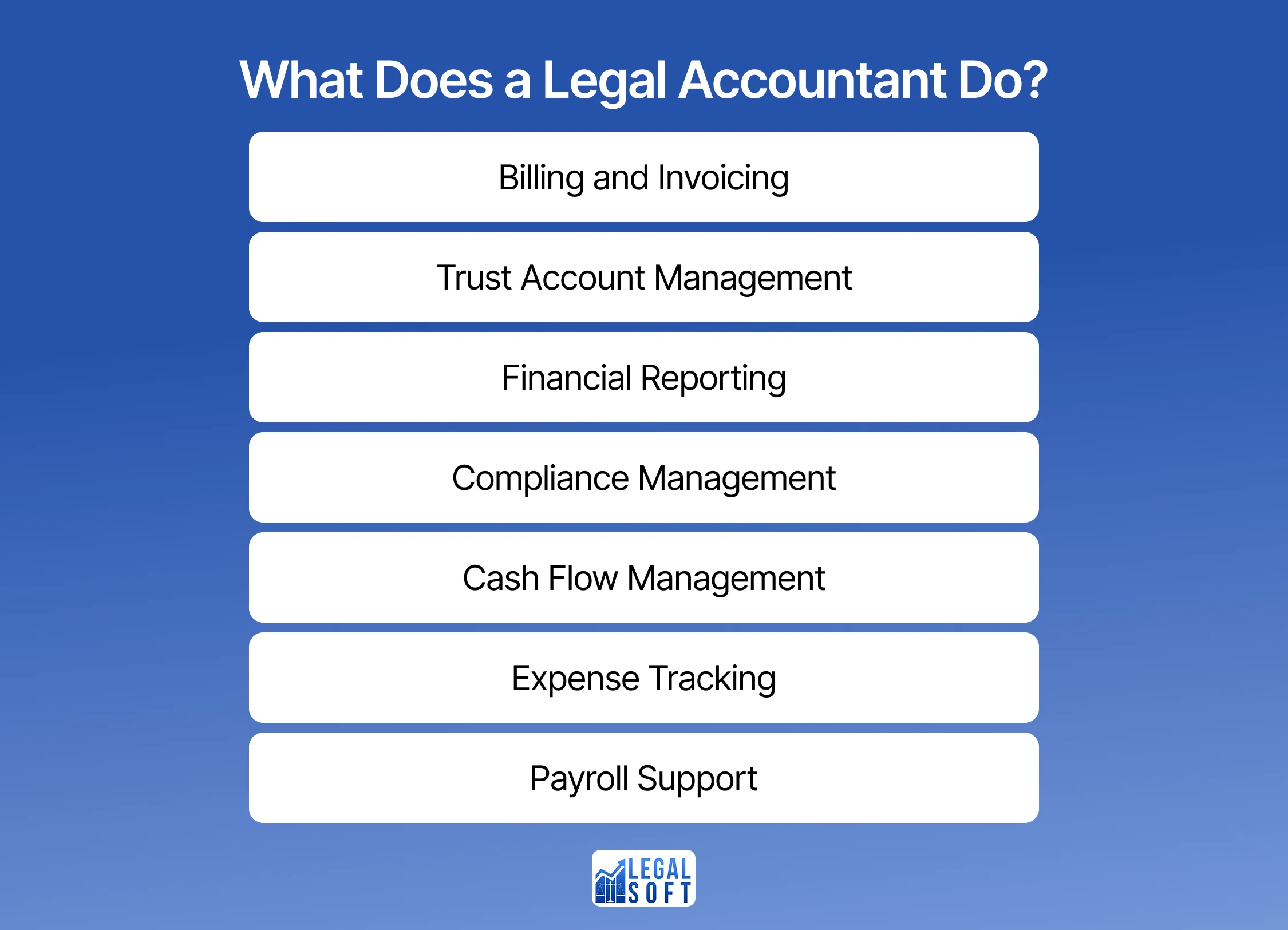
Legal accountants cover a wide range of financial functions inside a law firm. Here’s a look at some of their typical responsibilities:
- Billing and Invoicing — Prepare and send client invoices, track billable hours, and follow up on unpaid balances.
- Trust Account Management — Maintain IOLTA accounts, reconcile balances monthly, and ensure client funds are not mixed with firm operating funds.
- Financial Reporting — Produce reports covering revenue, expenses, and profitability that firm leadership can use to make business decisions.
- Compliance Management — Help keep the firm aligned with tax regulations, bar association rules, trust accounting requirements, and accounting standards.
- Cash Flow Management — Check incoming payments and outgoing expenses to ensure the firm can meet its financial obligations on time.
- Expense Tracking — Monitor and categorize firm expenses, including case costs, to support accurate financial records.
- Payroll Support — In smaller firms, legal accountants may also help manage payroll processing and related tax filings.
Essential Skills for a Legal Accountant
To excel, legal accounting specialists must possess a blend of skills that go beyond just being good with numbers. Let’s explore the core skills:
- Attention to detail: Legal accountants work with figures that affect client funds and firm compliance. Errors in trust accounts or billing can carry legal consequences.
- Communication: They regularly explain financial information to attorneys and clients who may not have a finance background.
- Knowledge of Legal Billing Rules: Familiarity with UTBMS codes, timekeeper rates, and client billing guidelines is necessary for e-billing and invoice review.
- Tech Proficiency: Most legal accountants use accounting and legal billing tools like Clio, TimeSolv, QuickBooks, or LawPay to manage records and billing.
- Time Management: Billing cycles, tax deadlines, and monthly close processes all run on strict timelines.
- Adaptability: Regulations, software systems, and client billing requirements can change. Legal accountants need to keep learning to stay effective.
Why Hiring Legal Accountant Can Benefit Your Law Firm
Law firms carry higher compliance requirements and ethical obligations than most businesses, especially when holding client funds in trust. A legal accountant helps make sure those standards are followed consistently.
Here's why they matter:
- Client funds stay protected and properly separated from firm operating accounts
- Invoices go out accurately and on time, reducing payment delays
- Compliance with bar association financial rules stays current
- Billing disputes can be resolved faster with accurate records on file
- Attorneys can focus on legal work instead of financial administration
- Firm leadership gets clearer financial visibility to support business decisions
Without a legal accountant, these responsibilities often fall to attorneys or general staff who may not have the specialized knowledge to handle them correctly.
Challenges Faced by Legal Accountants
The role comes with real pressure. Legal accountants deal with challenges that go beyond typical accounting work, including:
- Keeping up with state bar rule changes on trust account handling
- Managing rejected e-bills from clients with strict billing guidelines
- Reconciling trust accounts accurately when multiple client matters are active at the same time
- Adapting to new legal billing software as firms upgrade their systems
- Staying current with evolving tax policies and regulations
Firms that support their legal accountants with proper tools and continuing education are more likely to prevent these challenges from becoming problems.
Rules and Ethics to Know When Working With a Legal Accountant
Legal accounting isn't just about getting the numbers right. There are specific ethical obligations that govern how law firms handle money.
IOLTA Compliance
Interest on Lawyer Trust Accounts, or IOLTA accounts, are used to hold client funds that haven’t yet been earned by the firm. Legal accountants help make sure those funds stay separate from the firm’s operating accounts and are properly tracked.
Bar Association Requirements
Law firms must follow the financial recordkeeping rules in the states where they operate. ABA Model Rule 1.15 requires lawyers to keep complete records of client funds and property for five years after the end of the representation, though some states may have different requirements. Legal accountants help maintain required financial records and follow retention schedules.
Confidentiality
Legal accountants handle sensitive financial information about clients and firm operations. They are expected to maintain strict confidentiality in line with the firm’s broader ethical obligations.
No Commingling of Funds
Client funds and firm funds must always be kept separate. Commingling funds, even by accident, can lead to serious disciplinary consequences for attorneys.
Accurate billing
Overbilling or billing for work that wasn’t performed can violate professional conduct rules and may lead to disciplinary action. Legal accountants help verify that invoices reflect authorized work and approved expenses before they’re sent to clients.
Tips for Law Firms When Hiring a Legal Accountant

Finding the right person for this role takes more than reviewing a resume. Here’s what to keep in mind:
- Look for legal-specific experience. General accounting experience is a good foundation, but someone who has already worked in a law firm will usually require less onboarding and make fewer early mistakes.
- Check for software familiarity. Ask about their experience with tools like PCLaw, TimeSolv, Clio, or LawPay. Familiarity with your e-billing platforms is also a plus.
- Ask about trust accounting knowledge. Anyone in this role should be able to explain IOLTA accounts and why proper handling matters.
- Clarify the scope of the role before posting the job. Some firms need someone to handle billing only. Others need full-cycle accounting including payroll, tax prep, and financial reporting. Define it early to attract the right candidates.
- Consider a contract-to-hire arrangement. Starting with a trial period lets both sides assess fit before committing to a permanent role. This is especially useful for smaller firms hiring their first dedicated legal accountant.
- Involve your managing attorney in the process. The legal accountant will work closely with firm leadership. Getting buy-in from the people they’ll work with most helps ensure a better long-term fit.
The right legal accountant is a long-term investment. Taking the time to hire carefully saves the firm from financial errors and costly turnover down the line.
Final Notes
Legal accountants handle specific, regulated work that general accountants are not always equipped for. Billing accuracy, trust account compliance, and financial reporting inside a law firm can carry serious professional consequences when handled incorrectly.
For firms serious about staying compliant and keeping billing clean, bringing in a dedicated legal accountant is a practical step forward.
Improve Your Law Firm Financial Management
At Legal Soft, we provide virtual financial professionals, from bookkeepers to accountants, who focus exclusively on legal practices. Each candidate is vetted for legal-specific experience and proficiency with the tools your firm already uses.
Ready to improve your law firm’s financial health? Schedule a consultation today and browse candidates you can select to support your practice.