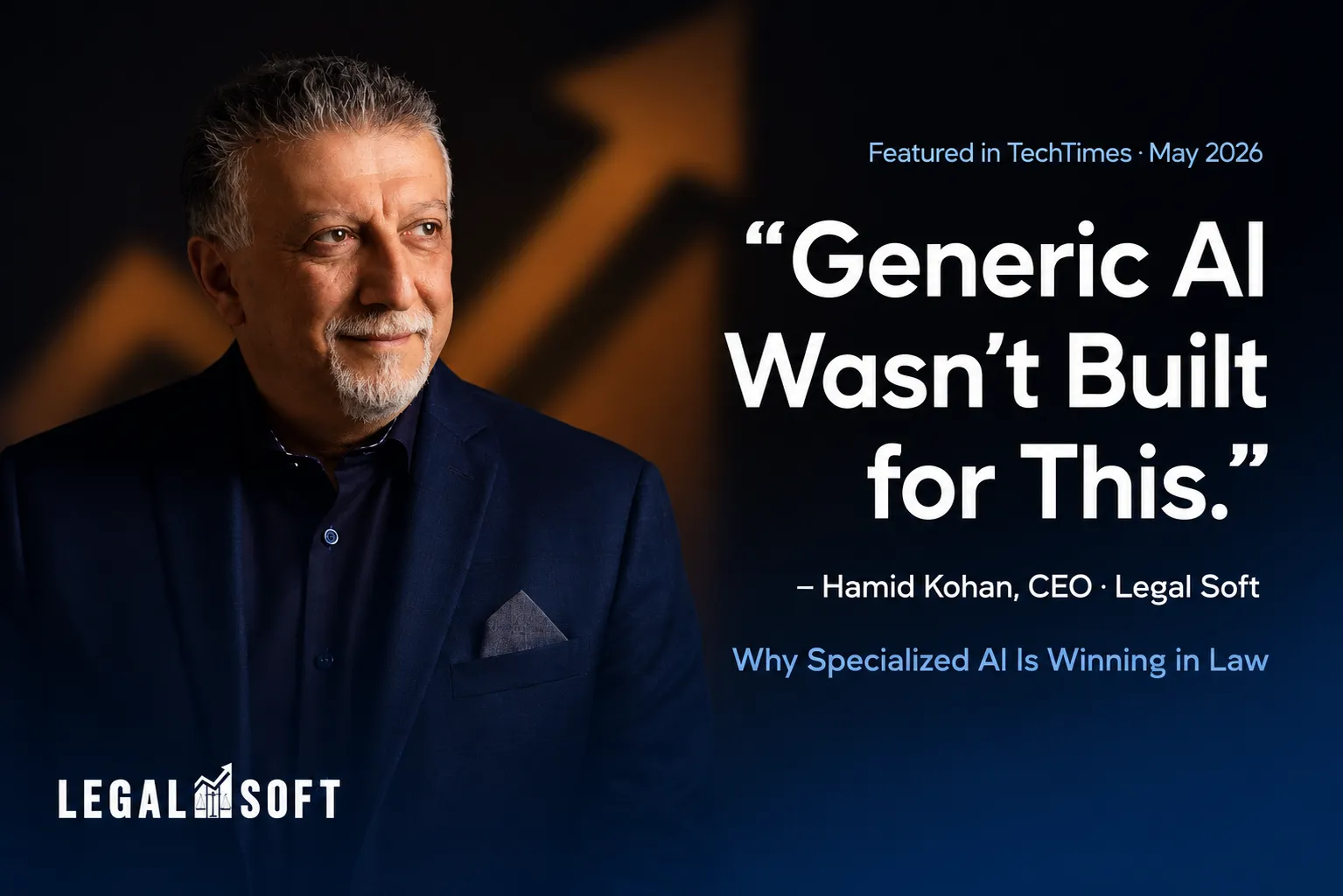
LOS ANGELES, CA (April 16, 2026) — Hamid Kohan, CEO and Founder of Law Practice AI, has been appointed to the Advisory Board for the Strategic AI for Legal Professionals Program at UCLA Law Executive Education. The appointment recognizes Kohan's leadership at the intersection of artificial intelligence and legal practice, positioning him among a distinguished group of practitioners and academics shaping how the legal profession adopts and applies AI technology.
The Strategic AI for Legal Professionals Program at UCLA Law Executive Education is designed to equip legal professionals with the knowledge and frameworks to evaluate, implement, and lead AI initiatives within their organizations. The program draws on legal expertise, technology strategy, and applied AI research to prepare attorneys and firm leaders for the operational realities of an AI-driven legal landscape.
Kohan brings to the advisory role more than a decade of experience building technology solutions specifically for law firms. As the founder of Law Practice AI, he has led the development of an AI-powered platform purpose-built for plaintiff personal injury practices, with tools spanning client intake, demand letter generation, medical record summarization, case management, and litigation support. The platform currently serves hundreds of law firms across the United States, with a particular depth of adoption among personal injury practices managing high-volume caseloads.
His appointment to the UCLA Law advisory board reflects a growing recognition that practical, firm-level AI experience is essential to shaping how legal education approaches the technology. As AI tools become standard infrastructure in legal practice rather than an emerging experiment, advisory voices that have built and deployed those tools at scale carry increasing weight in academic and professional development settings.
Law Practice AI continues to expand its platform capabilities in 2026, with recent data showing that firms using its AI demand letter drafting tools handle an average of 40% more active cases per attorney compared to firms relying on manual workflows. The company's focus on plaintiff law firms places it at the center of one of the highest-volume, most document-intensive segments of legal practice, making it a natural reference point for discussions about practical AI adoption in law.
Kohan's participation in the UCLA Law Executive Education program adds to a broader portfolio of industry engagement that includes speaking appearances at legal technology conferences, contributions to legal AI research discussions, and recognition among legal technology innovators driving measurable change in how law firms operate.
Law Practice AI is an AI-powered legal practice management platform built for plaintiff personal injury law firms. The platform combines AI document drafting, medical record summarization, client intake automation, demand letter generation, and litigation support in a single unified system. Law Practice AI serves hundreds of law firms across the United States, helping personal injury practices work faster, recover more for their clients, and scale without proportional increases in overhead.