


15 Good Books for Lawyers
While law school teaches you how to practice law, it doesn’t prepare you to run a law firm. Running a law firm takes more than just law-related knowledge. You require good business sense, client management, and leadership skills to ensure your law firm runs successfully and profitably.
Choosing the right books can make you a better lawyer. Whether you're a law student or an experienced lawyer, the books that you read can help you to succeed in your law profession. At the end of the day, your law firm’s success starts with you.
1. The E-Myth Attorney by Michael E. Gerber
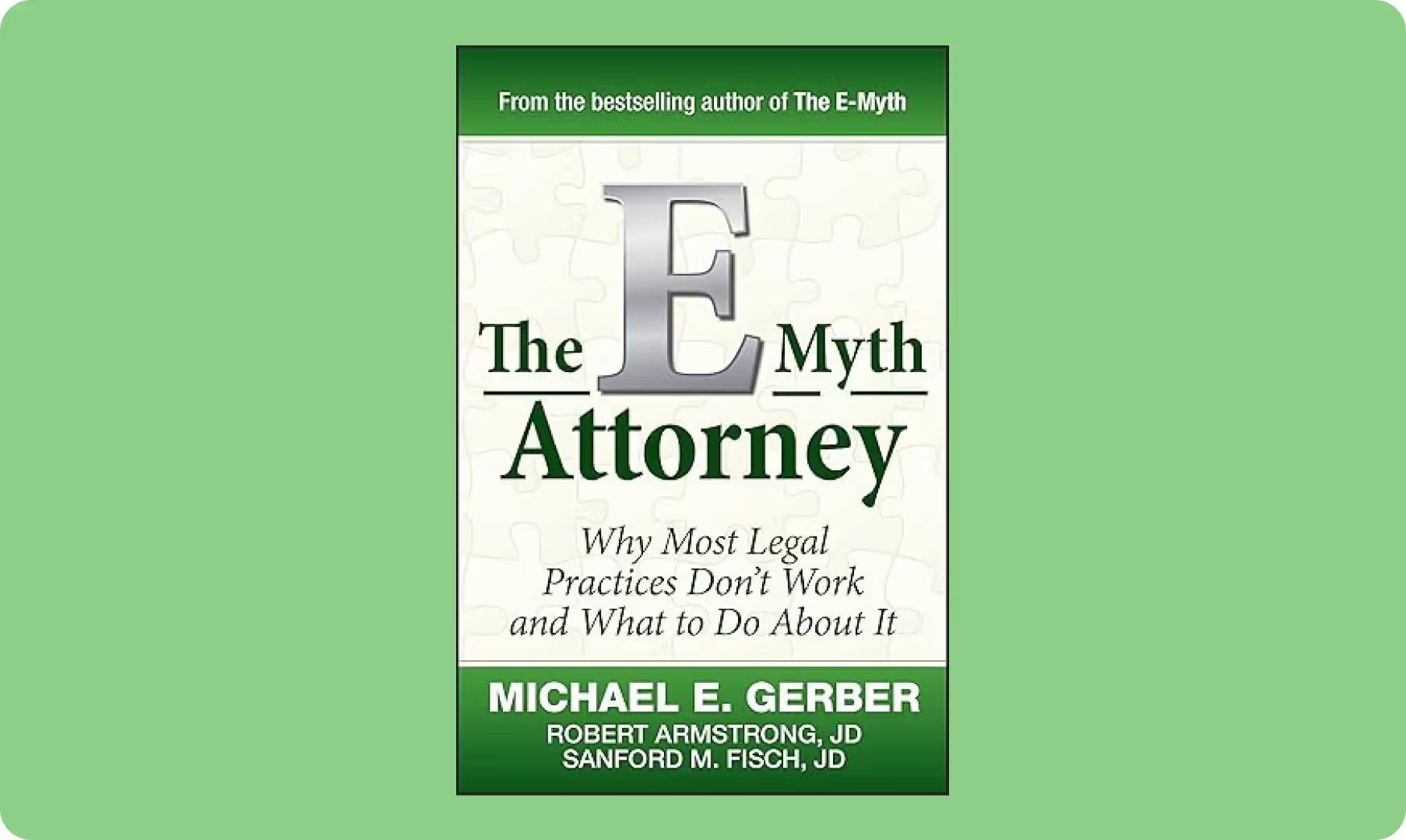
This book has been a game-changer for thousands of attorneys worldwide. It tackles the "Entrepreneurial Myth"—the belief that being great at practicing law automatically means you'll be great at running a law firm.
Gerber and his co-authors show you how to work on your business instead of just in it. You'll learn to create systems that allow your firm to run without your constant involvement.
This book helps you shift from doing all the work to managing the work and building a law practice that doesn't depend entirely on you.
Best for: Lawyers who feel trapped working in their business instead of on it.
2. The Client-Centered Law Firm by Jack Newton
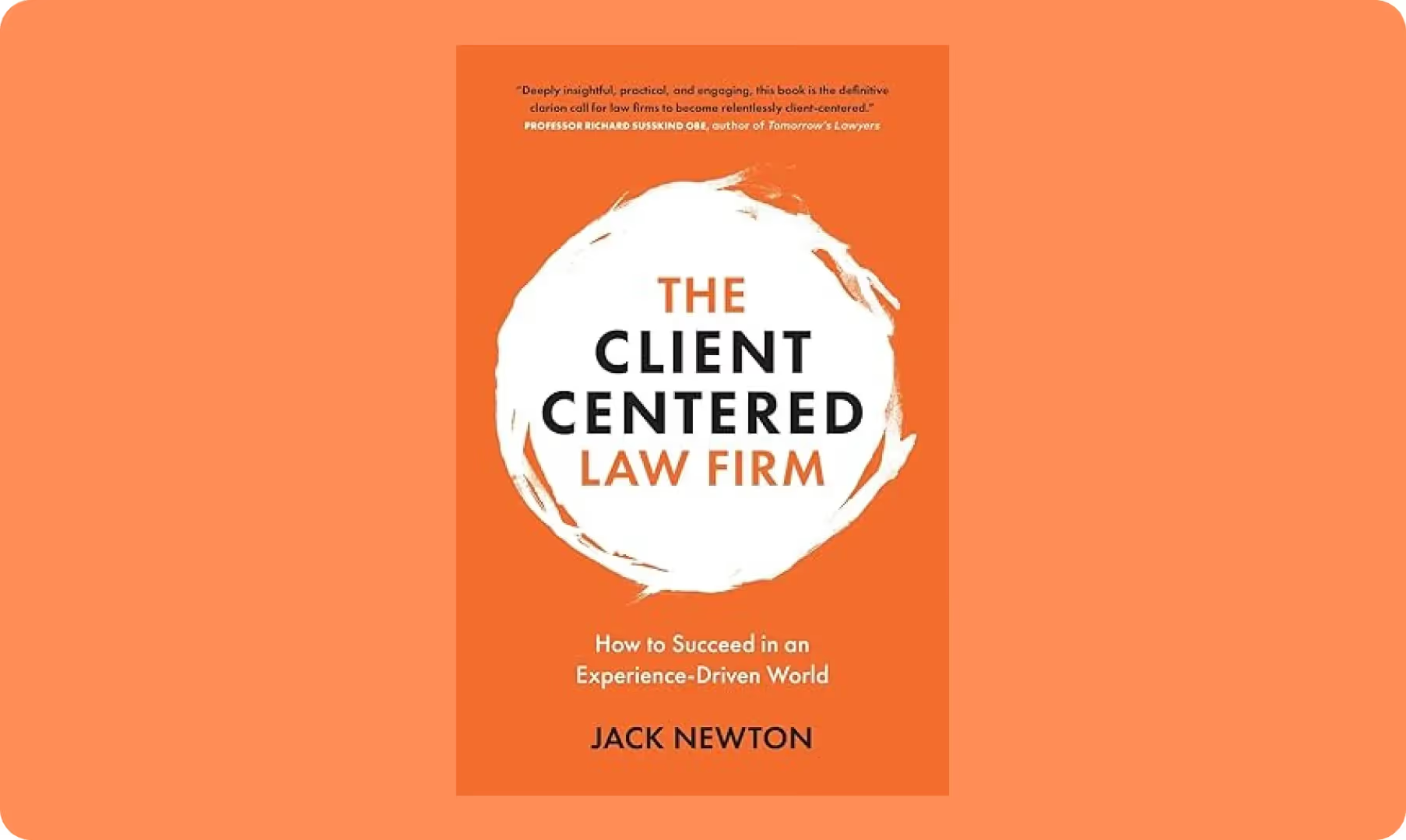
In an era where clients expect a high level of convenience, law firms need to rethink their approach to client experience. Jack Newton, founder of Clio, provides a compelling case for why putting clients at the center of your practice is both the right thing to do and a smart business strategy.
This book challenges traditional ways lawyers have always done things. It teaches you to design your firm around client needs instead of your convenience and provides data on what clients actually want from their lawyers.
Newton covers online booking, transparent pricing, and clear communication strategies that create a client-centered practice, leading to better reviews, more referrals, and higher retention.
This is essential reading if you want to compete in today's legal market.
Best for: Firms looking to increase referrals and modernize their service delivery.
3. Never Split the Difference by Chris Voss
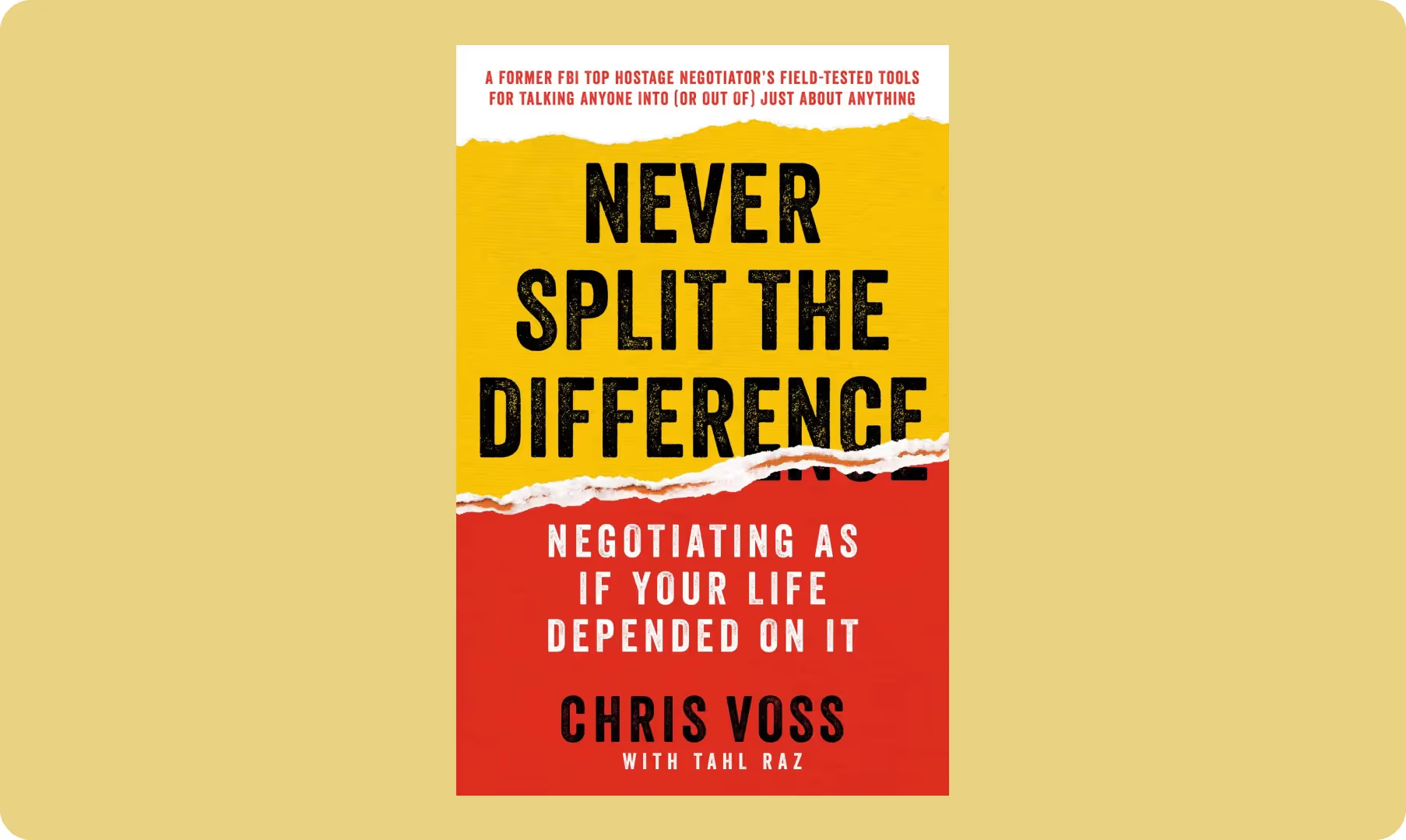
Written by a former FBI hostage negotiator, this book teaches you a new approach to negotiations. Voss’s methods can be applied in legal practice, whether you’re dealing with opposing counsel, settling cases, or negotiating contracts with vendors.
Instead of traditional “win-win” theories, Voss shares tactical empathy techniques and psychological insights that help you achieve better results than simply splitting the difference.
You’ll learn to label emotions, mirror language, and use calibrated questions. As a lawyer, negotiation is at the core of your work, and mastering these skills will improve your effectiveness in any legal negotiation.
Best for: Litigators, transactional attorneys, and anyone who negotiates regularly.
4. Traction: Get a Grip on Your Business by Gino Wickman
If you feel like your firm is running you instead of the other way around, you need the Entrepreneurial Operating System (EOS).
Wickman presents the EOS, a complete framework for running your business. This system helps you get control over your law firm's operations.
The book teaches you to set clear goals, measure progress, and hold people accountable. It breaks down the six key components of any business: Vision, People, Data, Issues, Process, and Traction.
Many successful law firms swear by EOS, and this book gives you the roadmap to implement it in your own practice.
Best for: Firm leaders looking for a proven management framework to align their team.
5. Profit First by Mike Michalowicz
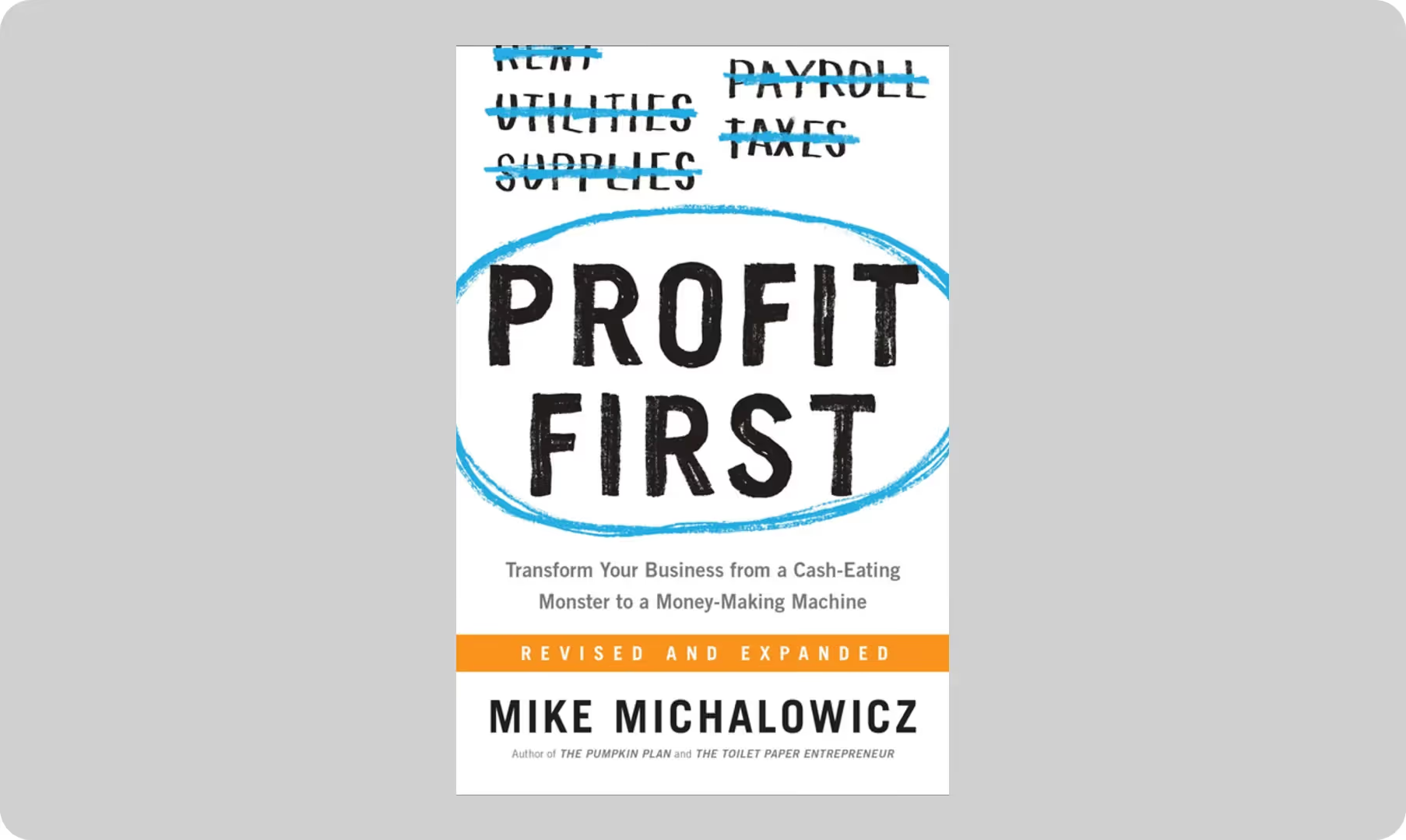
Many law firms generate high revenue but surprisingly low profits. This book solves that problem by changing how you handle money as it comes in.
Profit First challenges traditional accounting methods and introduces a cash management system. You learn to take profit first instead of hoping there’s money left over.
Michalowicz's simple yet powerful system helps you manage cash flow, eliminate debt, and build a financially healthy practice. It shows you methods that prevent you from spending everything you make and allows you to have your real financial picture at a glance.
The method is simple but requires discipline to implement correctly.
Best for: Attorneys struggling with cash flow or looking to improve their firm's financial health.
6. The Game Changing Attorney by Michael Mogill
If you want to dominate your market, you have to understand branding. Michael Mogill has helped hundreds of law firms transform their marketing and positioning.
This book explains why being a good lawyer isn’t enough to attract high-value cases in a crowded market. You’ll learn about personal branding, digital marketing, and creating a firm that pushes you to build a brand that resonates and becomes the obvious choice for your ideal clients.
Best for: Attorneys who want to dominate their local market through branding.
7. Managing the Professional Service Firm by David H. Maister
This book is essential reading for anyone managing or aspiring to manage a law firm. Maister draws on decades of experience consulting with law firms to deliver insights on managing professional talent and maintaining a strong firm culture.
The book addresses the unique challenges of managing knowledge workers and maintaining quality while growing your practice. If you want to understand the business dynamics of professional services at a deeper level, this is the place to start.
Best for: Partners and firm leaders overseeing teams.
8. How to Scale Your Stupid Law Firm by Hamid Kohan

Don’t let the provocative title fool you—this is a masterclass in law firm growth. It’s an essential read for any attorney who wants to expand their operations, as Kohan provides direct advice on scaling a law firm without burning out or compromising quality.
You'll learn specific systems for hiring, delegation, and creating predictable revenue. The book focuses on removing you as the bottleneck in your firm's growth.
Kohan offers practical advice and uses real examples from law firms to show what works and what doesn’t. The language is straightforward and avoids corporate jargon, giving you actionable steps instead of theory.
Best for: Law firms wanting predictable revenue and systems.
9. Win Your Case by Gerry Spence
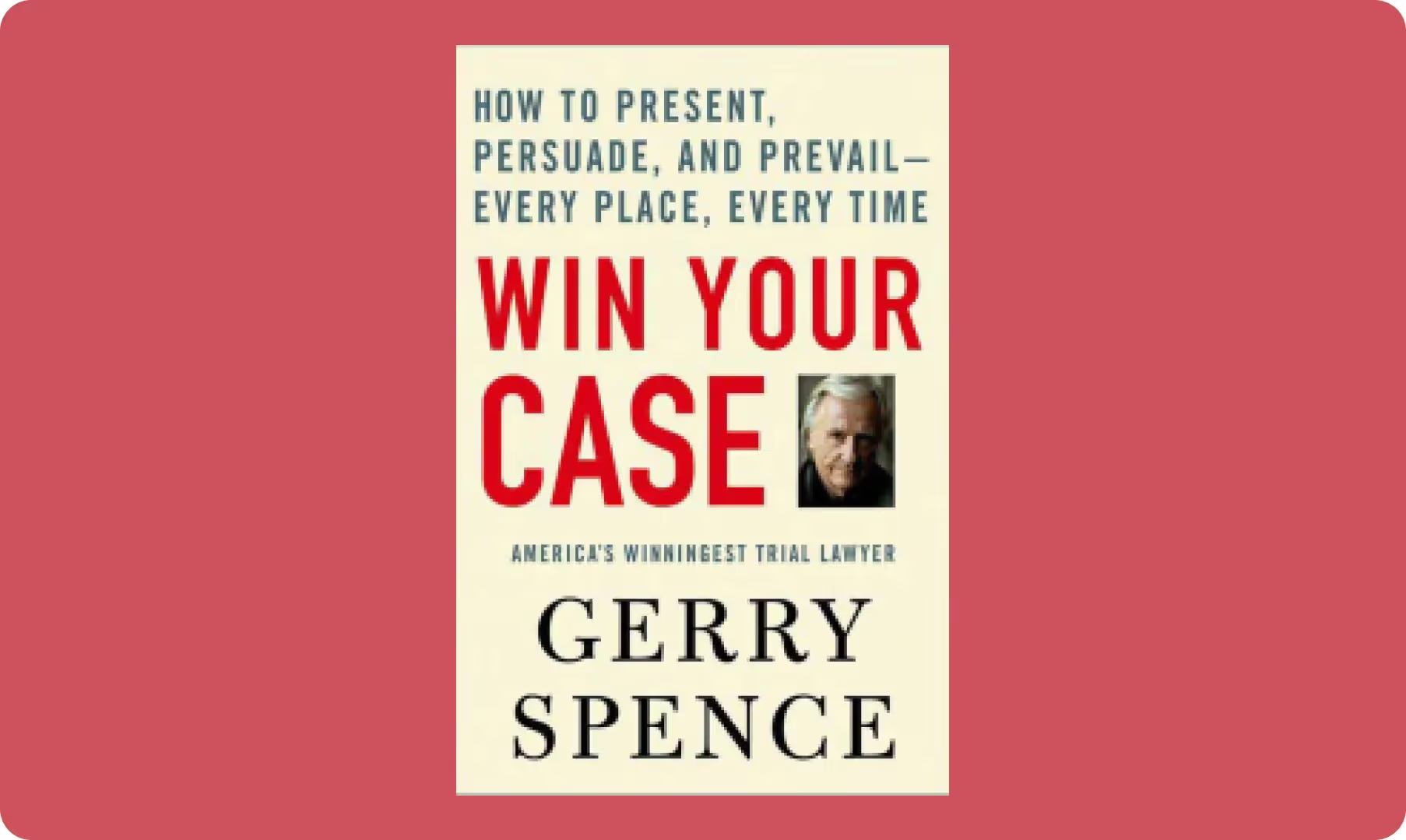
Gerry Spence had never lost a criminal case and hadn't lost a civil case since 1969. In this book, he shares the trial techniques and persuasion strategies that made him one of America’s most successful litigators.
You’ll learn powerful courtroom tactics, how to connect with juries on a human level, tell compelling stories, and advocate passionately for your clients. If you spend any time in the courtroom, this book can help sharpen your skills and legal strategy.
Best for: Trial lawyers and litigators looking to improve their persuasion skills.
10. The Tools of Argument by Joel P. Trachtman
Legal arguments follow patterns, and understanding those patterns gives you an advantage. Joel Trachtman breaks down the fundamental tools of legal reasoning and shows you how to construct—and deconstruct—arguments effectively.
You’ll learn to sharpen your analytical thinking and argumentation skills, and recognize the logical structures underlying legal disputes. Whether you’re drafting briefs, preparing for oral arguments, or negotiating deals, these skills will serve you well.
Best for: Attorneys and law students looking to strengthen their legal reasoning.
11. The Lawyer As CEO by Reza Torkzadeh
Most lawyers are trained to be legal technicians, not business leaders. Torkzadeh provides a blueprint for shifting your mindset from practitioner to CEO of your own firm.
The book covers everything from developing your team and creating a client-centric culture to building a firm that operates like a Fortune 500 company. You’ll learn how to step away from daily casework to focus on high-level strategy and leadership.
It’s a modern playbook for attorneys who want to remain competitive and grow in a legal landscape dominated by large corporations and powerful executives.
Best for: Attorneys ready to step into a true leadership role.
12. The 7 Habits of Highly Effective People by Stephen R. Covey
This timeless classic belongs on every professional’s bookshelf and is relevant for lawyers. Covey focuses on personal and professional effectiveness that can be applied to legal practice, client relationships, and firm management.
From "Begin with the End in Mind" to "Seek First to Understand, Then to Be Understood," these habits apply directly to legal practice. Covey emphasizes character over personality, showing how your values drive your actions and results.
This book provides a foundation for personal development and concepts that remain relevant decades after publication.
Best for: Attorneys who want to improve their personal effectiveness and leadership.
13. How to Tune-up Your Law Practice by Hamid Kohan
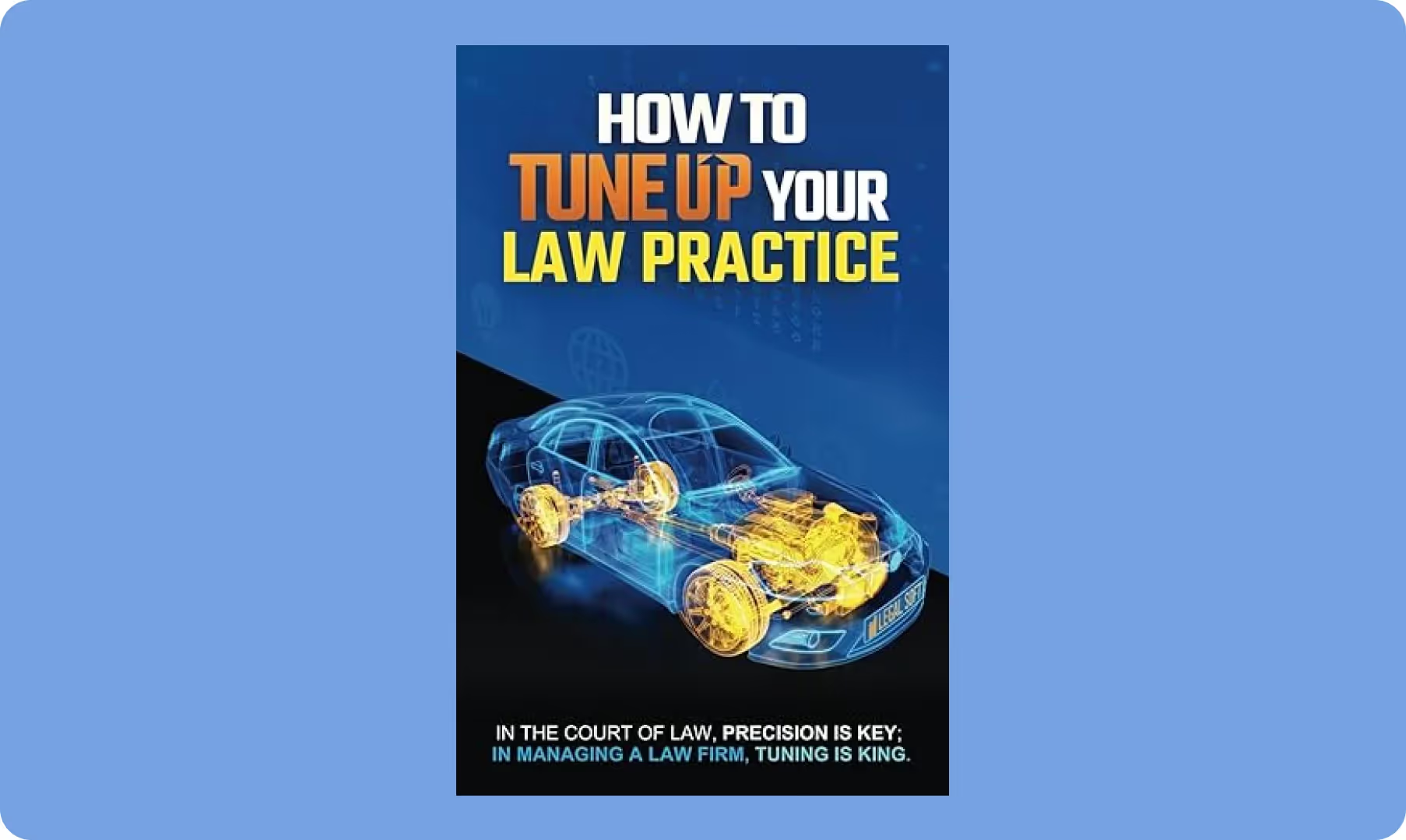
Think of your law firm like a vehicle: even if it’s running, it might not be running at peak performance.
This book provides practical fixes for law firm problems and serves as a manual for lawyers who want to refine their existing systems for maximum output. You get checklists and templates you can use right away to address issues like client intake bottlenecks, collections problems, and low profitability.
Each chapter focuses on one area of your practice that needs improvement and offers a practical guide to auditing your current operations to find “leaks” in productivity.
With Kohan’s experience running and consulting with law firms, the advice is specific to legal practices—not generic business tips—and helps you identify inefficiencies and implement proven solutions.
Best for: Firm owners auditing internal workflows for hidden inefficiencies to optimize operations.
14. You Can't Teach Hungry by John Morgan
John Morgan built Morgan & Morgan into one of the largest personal injury firms in the country, and in this book, he shares exactly how he did it.
It's raw, honest, and packed with hard-earned lessons about what it really takes to build a legal empire. The book covers everything from hiring the right people to managing massive marketing budgets.
Morgan emphasizes that success requires a hunger and drive that can't be taught—you either have it or you don't. It’s a high-energy read for lawyers who have big dreams of scaling.
Best for: Attorneys looking for culture and motivation lessons for building legal teams.
15. Think and Grow Rich by Napoleon Hill
First published in 1937, this book remains one of the most influential personal success guides. Hill studied over 500 successful individuals to distill the principles that drive achievement, and those principles are just as relevant to lawyers today.
You’ll learn about the power of definite purpose, organized planning, and persistence in reaching your goals. Hill covers mindset and goal-setting in ways that apply to any profession.
For attorneys who want to develop the mindset needed to build wealth and create lasting success, this book emphasizes taking consistent action toward your goals.
Some of the language feels dated, but the principles still work. You'll find ideas about building wealth and achieving success that apply to your legal career.
Best for: Attorneys looking to develop a success-oriented mindset and guiding principles.
Final Note
Building a successful law firm takes more than legal expertise. It requires continuous learning, a willingness to adapt, and the humility to recognize that there’s always room for improvement.
These books represent some of the best thinking on law firm management, business strategy, and personal development.
Knowledge can be powerful, but when you turn these pages into action, the real magic happens. The first step toward a successful firm is a commitment to your own growth.
Pick one book from this list that addresses your biggest current challenge. Read it, implement its ideas, and watch how it transforms your practice. Happy reading!
Frequently Asked Questions
What is your recommended book for law students?
Getting to Maybe by Richard Michael Fischl and Jeremy Paul. Law school exams are unlike any tests you’ve taken before, and this book cracks the code on how to approach them.
Fischl and Paul explain the unique style of legal analysis professors are looking for and show you how to structure your answers for maximum impact. This book helps law students prepare for exams and anyone looking to strengthen their legal analysis skills.
What books do lawyers read?
Lawyers typically read books on legal philosophy, firm management, business strategy, professional development, and negotiation to strengthen their skills and grow their practices.


