

If you're a lawyer who spends most of your time involved in every task and managing every minor detail of daily operations, you aren't actually running a business—you’re running around it.
Many attorneys feel that every task is too important or too complex to hand off to someone else. In fact, the Bloomberg Law 2024 Attorney Workload & Hours Survey found that attorneys experience burnout 42% of the time on average, largely due to heavy workloads and long hours.
You've probably thought about building a delegation system before. But where do you start when stopping to plan feels like it'll slow everything down? Or maybe you simply can't pinpoint which tasks are actually safe to delegate.
At Legal Soft, we’ve helped thousands of law firms build teams they can confidently delegate to. We’ve seen firsthand that the secret to reclaiming your time isn’t working harder, but working smarter. It comes down to mastering a simple 3-step process: identify, match, and delegate.
Now let’s take a closer look at what that actually means.
Step 1: Identify What You Can Delegate
It sounds simple enough—just figure out what you can hand off. But when you're deep in the daily tasks and operations of your practice, it's difficult to see clearly. Everything feels urgent. Everything feels important.
That's why guessing doesn't work. You need real data about how you actually spend your time.
The 15-Minute Audit
Here's a practical exercise that takes the guesswork out of task identification.
For three consecutive workdays, set an alarm on your phone to go off every 15 minutes during your working hours. Every time it rings, write down exactly what you were doing in a spreadsheet or notes app.
Don’t overthink it. Simply capture: the task, how complex it felt to you, and whether it directly generates revenue.
Here’s how you can categorize each task by complexity:
- High Complexity: Tasks that require your specific legal judgment, licensing, client relationships, or years of experience. These can't function properly without your direct involvement. Think courtroom strategy, complex negotiations, or high-stakes client consultations.
- Low Complexity: Tasks that can be completed successfully with clear instructions and minimal oversight. Someone with proper training can handle these without needing your constant input. Think document formatting, scheduling, research compilation, or routine follow-ups.
Here’s how you can categorize each task by revenue potential:
- High Revenue: Activities that directly bring in revenue or protect significant client relationships, such as client-facing work, case strategy, and business development.
- Low Revenue: Necessary work that keeps operations running but doesn't directly generate income, such as administrative tasks, internal organization, and routine filings.
After three days, you'll have a clear snapshot of where your time actually goes—not where you think it goes.
The Legal Delegation Quadrants
Now comes the strategic part. Plot your tasks into four quadrants based on complexity and revenue. This is where you'll find clarity on what to keep and what to delegate.
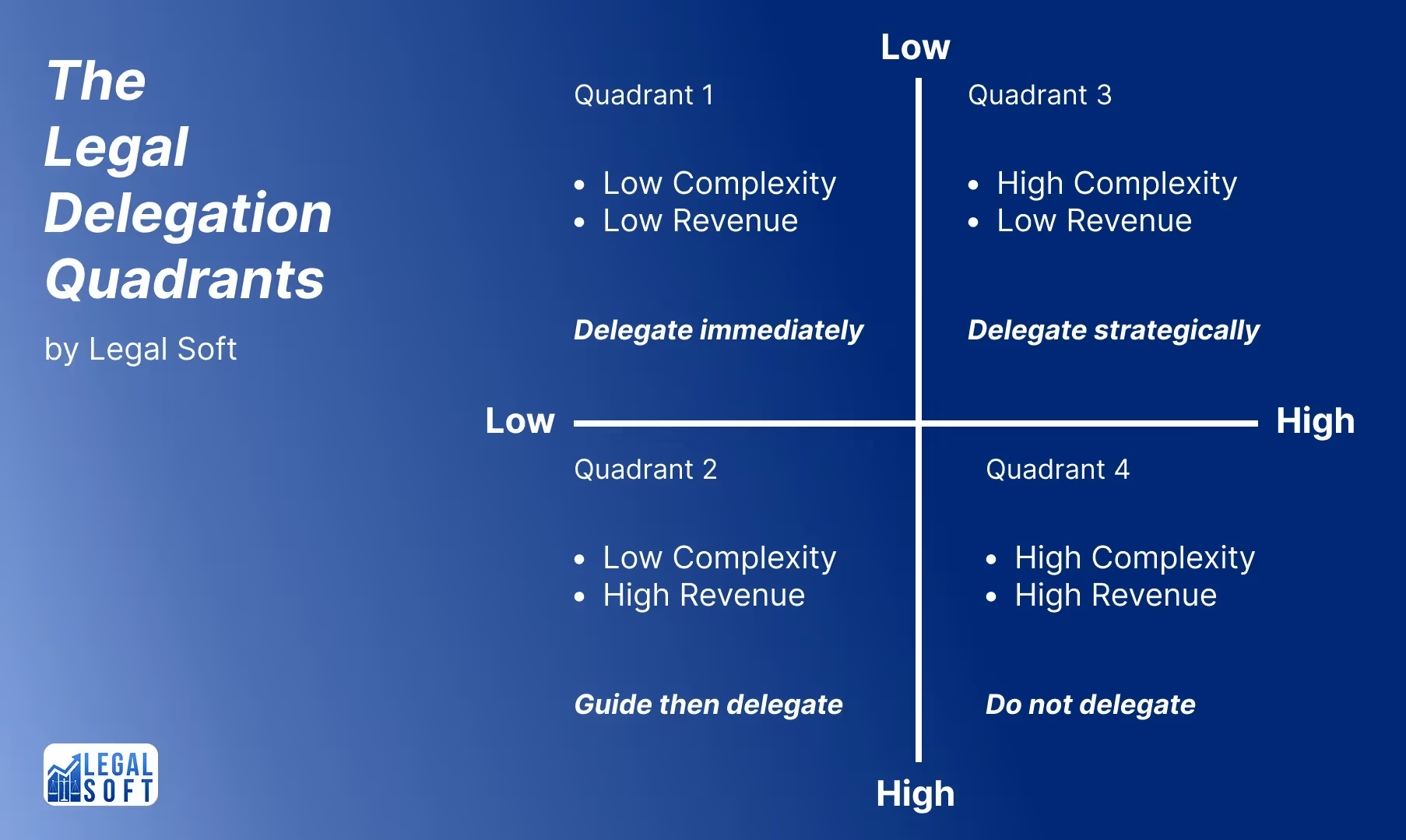
Quadrant 1: Low Complexity & Low Revenue - Delegate immediately
This is your gold mine. These tasks are important to operations but don't require your expertise or generate direct revenue. They're ideal for immediate delegation with minimal supervision.
- Examples: Calendar management, filing documents, data entry, or basic client intake forms.
Set up clear instructions once, provide initial training, and let someone else handle them going forward. You'll barely notice they're gone.
Quadrant 2: Low Complexity & High Revenue - Guide then delegate
Many lawyers cling to these tasks because it feels risky to hand them off, as they impact the bottom line. But here’s the reality: they're still low complexity, meaning someone else can perform them effectively.
The key is to set clear standards and position yourself as the final checkpoint. You review and approve—you don't execute every step.
- Examples: Drafting routine contracts, preparing discovery documents, client communication templates, or demand letter preparation.
Quadrant 3: High Complexity & Low Revenue - Delegate strategically
These are the burdensome tasks—complex enough to drain your energy but not impactful enough to justify your hourly rate. You can't ignore them, but you also shouldn't be the one doing all of it either.
The strategy here is to break these tasks into smaller sub-tasks. Identify which components can be delegated and keep only the portions that truly require your expertise.
- Example: A detailed compliance review, where you delegate the initial checklist and handle only exceptions or final analysis.
Quadrant 4: High Complexity & High Revenue - Do not delegate
After sorting through the first three quadrants, what remains are the tasks that genuinely need you. These are high-stakes, high-reward activities where your expertise directly drives results.
This is where you should be spending your time. By delegating everything else, you reclaim the hours needed to focus on the work that grows your practice and serves your clients at the highest level.
- Examples: Trial preparation and courtroom appearances, high-value client negotiations, business development, and complex legal analysis.
Step 2: Match Tasks to the Right Professional
Once you know what to delegate, the next step is determining who should handle it. Placing the wrong person in a role is often why delegation fails the first time.
Delegation only works when the person receiving the task is equipped to succeed. Think of it like building a case: you wouldn't assign medical research to someone without the proper background. The same logic applies here.
Consider these three filters:
1. Skills and Experience Alignment
Does the task match what someone on your team already knows how to do? Review their background, past work, and core strengths.
A paralegal with litigation experience is a natural fit for discovery tasks. An assistant with strong communication skills can handle client scheduling and follow-ups.
Don't force a fit. The goal is to set people up for success—not struggle.
2. Current Bandwidth
Even if a team member has the right skills, do they have the capacity?
Overloading your best people can lead to burnout and costly mistakes. Assess current workloads honestly before assigning new responsibilities.
If your internal team is already stretched thin, that's valuable information, and it leads to the third consideration.
3. Does External Hiring Make Sense?
Sometimes, the math is simple: you either don't have the right expertise in-house, or your team is already operating at full capacity. That's when bringing in outside support becomes the practical choice.
Hiring externally doesn’t have to mean adding expensive in-house employees. Many law firms now work with virtual legal professionals with the same level of expertise you expect from in-house staff, but with a more flexible cost structure.
These professionals work remotely using secure digital systems and modern legal technology. Depending on your needs, they can work on a contract basis or integrate as dedicated team members who function as part of your firm.
This is where many firms find success with Legal Soft. We connect law firms with experienced virtual legal professionals who have worked across a wide range of practice areas. They become true extensions of your team and work exclusively for your firm.
Step 3: Delegate and Refine
You've identified your tasks. You've matched them with the right people. But you shouldn't just dive straight into delegating all tasks and walk away.
Delegation without systems leads to confusion, mistakes, and frustration—for you and your team. To make it work, you need to build a system that ensures success.
Best Practices for Effective Delegation
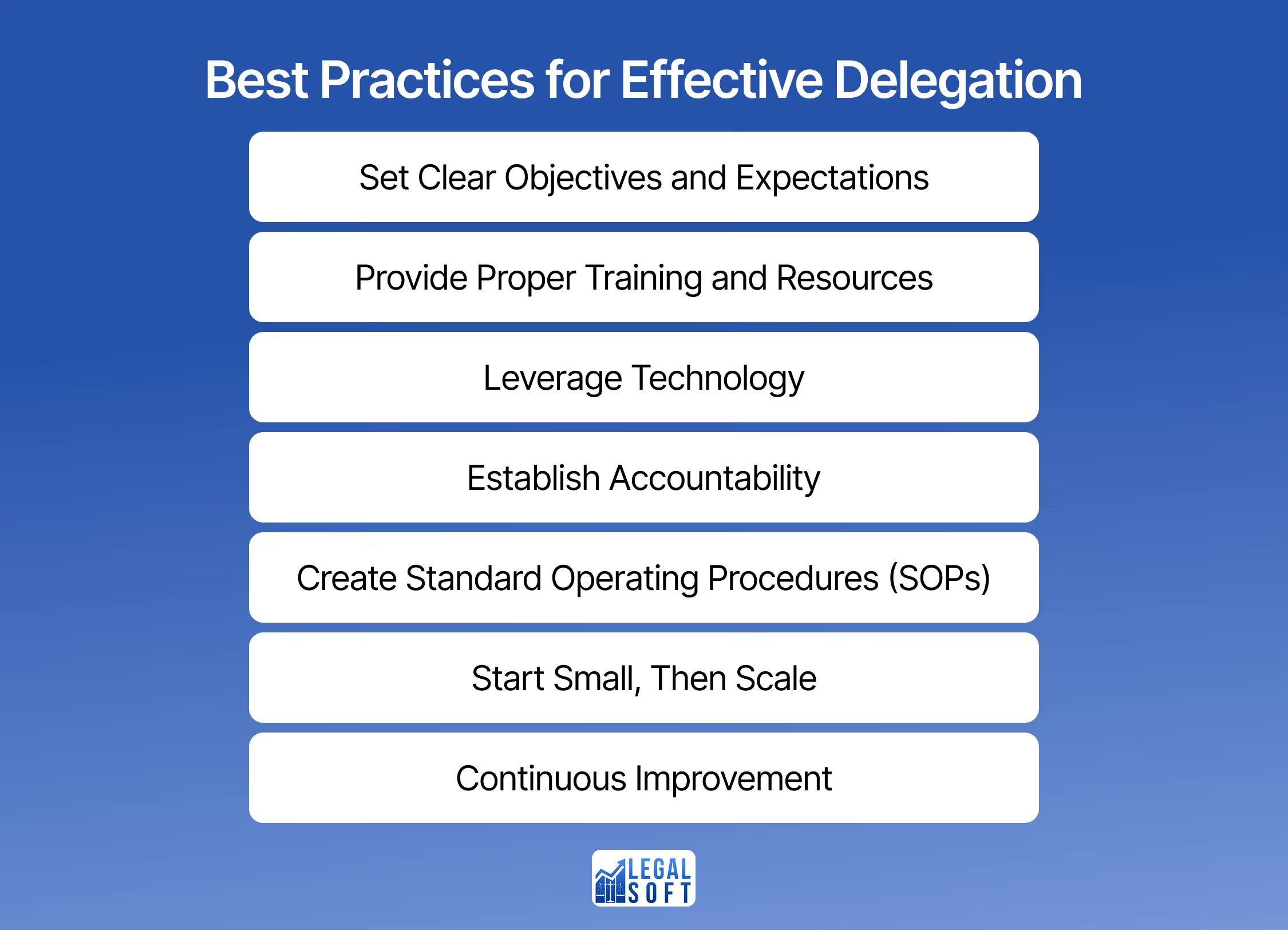
- Set clear objectives and expectations: Define what success looks like. Include deadlines, quality standards, and a clear definition of what “done” means. Put it in writing to avoid confusion and unnecessary back-and-forth.
- Provide proper training and resources: Don’t assume others know what you know. Even experienced professionals need context on how your firm operates. Investing time upfront in training and documenting your processes gives team members a reliable reference point and prevents costly mistakes later.
- Leverage technology: Use practice management software, shared task boards, and communication tools to keep everyone aligned. Technology creates transparency without micromanagement and transforms how delegation flows within your firm.
- Establish accountability: Delegation isn’t just about assigning tasks—it’s about transferring ownership. Make it clear that the person handling the task is responsible for its outcome. Check in at milestones, but give them room to own their work.
- Create standard operating procedures (SOPs): Document your most commonly delegated tasks using templates and checklists. This ensures consistency and makes onboarding new team members easier in the future.
- Start small, then scale: Begin with a few low-risk tasks from Quadrant 1. Let your team build confidence and prove the system works. Then gradually expand to more complex responsibilities as trust and processes solidify.
- Continuous improvement: Review your delegation process regularly. Gather feedback, identify bottlenecks, and refine your systems based on real experience.
Start Reclaiming Your Time
Effective delegation is about working smarter. It positions you to do the work only you can do. You focus your expertise where it matters most and build a team that can handle the rest.
The attorneys who build thriving practices aren’t the ones who try to do everything themselves. They’re the ones who build systems and processes that protect their time for high-impact work.
With the right delegation framework, you can stop being an employee of your firm and start being the owner of it. You can return to the work that drives meaningful growth for your practice.

Frequently Asked Questions
Where do lawyers find reliable support for task delegation?
Many attorneys begin by optimizing their existing staff. From there, they expand through referrals or legal staffing agencies that specialize exclusively in the legal industry. The key is finding professionals who understand and have experience with your firm’s daily workflows.
How can delegation improve productivity?
Instead of you completing five tasks sequentially, five tasks can be completed simultaneously by your team. This frees you to focus on revenue-generating work that truly requires your expertise.
What is the 80/20 rule of delegation?
The 80/20 rule—also known as the Pareto Principle—states that 80% of your results come from 20% of your efforts. Applied to delegation, it means identifying the small portion of high-impact tasks that truly require your expertise and delegating the remaining lower-value tasks to others.
How do I know if I’m micromanaging?
You are likely micromanaging if you spend excessive time reviewing minor details, require constant updates on routine tasks, or believe that a task can only be done correctly if you handle it yourself instead of providing feedback for others to fix it.
Is it safe to delegate client communication?
Yes, as long as you establish clear scripts, boundaries, and oversight. A trained intake specialist can manage routine updates and handle preliminary screenings while maintaining strict confidentiality and professionalism. You remain responsible for legal advice and final decision-making.