

Legal technologies focused on improving law practices are continually evolving and entering the industry; however, for many lawyers, managing their operations remains an ongoing challenge. They still struggle to stay productive and achieve sustainable growth, even with the right tools and resources to support them.
Maybe instead of looking outward, it’s time to look inward—at the fundamental part of how you run your law firm: your organizational structure itself.
The way you organize your team can be a game changer, directly affecting how smoothly cases move through your firm, how quickly decisions are made, and how effectively you serve clients.
A clear hierarchy helps everyone understand their role, know who to turn to for guidance, and see their potential career path within the firm.
Whether you're planning to start a law firm or expand an existing one, we’ll walk you through a complete law firm organizational structure with clearly defined roles that support an effective modern practice and career progression. Let's dive into the basics.
Law Firm Hierarchy
The law firm hierarchy defines how roles and responsibilities are structured within a firm. It creates a clear path for decision-making and minimizes confusion among staff.
This framework ensures everyone knows their position, who they report to, and the tasks they are responsible for—all contributing to the firm’s overall success.
Here's a quick glance at the typical law firm hierarchy:
- Leadership – Top executives who set the firm's direction and strategy.
- Partners – Senior attorneys with ownership stakes and guide major cases.
- Counsel – Experienced attorneys in specialized or advisory roles.
- Associates – Attorneys at various levels who support partners and handle client work.
- Legal Support – Staff assisting with tasks that keep cases moving forward.
- Business & Admin Staff – Professionals managing operations, finance, and firm growth.
Law Firm Organizational Chart: Free Sample
An organizational chart is a visual representation of a law firm’s hierarchy. It maps roles and reporting lines, helping everyone understand the firm’s structure and responsibilities.
A well-designed organizational chart promotes accountability, ensures smooth communication across teams, and supports strategic growth within the firm.
Below is a sample organizational chart showing how these roles connect:
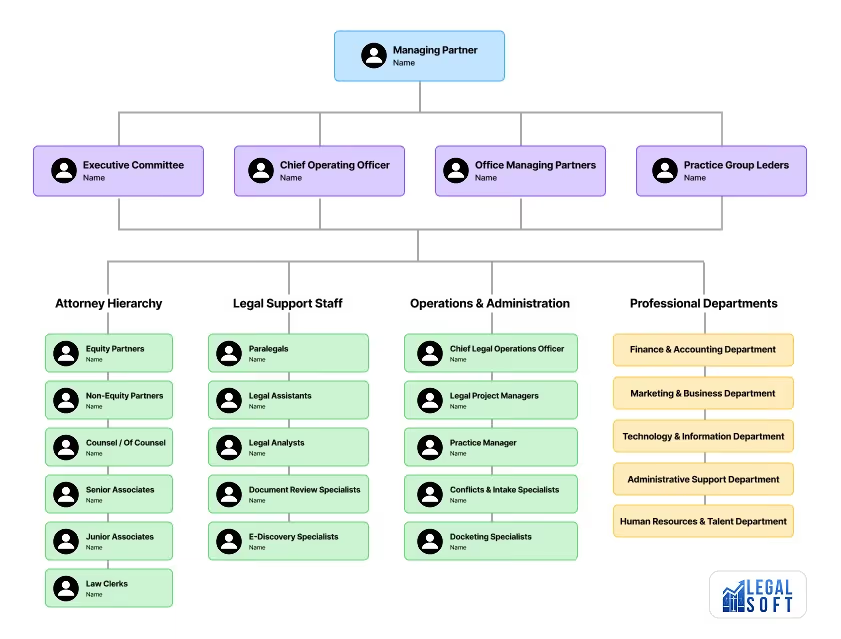
Download it for free and easily customize it with your own information using our template.
Complete Law Firm Organizational Structure
Understanding the firm structure requires knowing each role and department in detail. Here is a breakdown of the positions:
Executive & Legal Leadership
These roles are responsible for the law firm’s management, business direction, and strategy.
- Managing Partner: Oversees the firm’s overall operations and strategic direction. This role makes final decisions on major initiatives, manages partner relationships, and represents the firm externally.
- Executive Committee / Management Committee: A group of senior partners who govern major operational, financial, and strategic decisions. They ensure the firm remains aligned with its mission, goals, and long-term profitability.
- Chief Operating Officer (COO): An executive focused on the business side of the firm, including office operations, vendor relationships, budgeting, and administrative functions.
- Practice Group Leaders / Department Heads: Attorneys who lead specific practice areas such as litigation, corporate law, or family law. They guide teams, supervise matters within their expertise, and oversee attorney performance within their groups.
- Office Managing Partners: In multi-office firms, these individuals oversee local operations and ensure consistency with firm-wide policies while adapting to regional needs.
Attorney Hierarchy
This is the typical progression path for lawyers within a firm, from entry-level positions to ownership. Large law firms often feature a two-tier partnership structure, with equity partners who hold ownership shares and non-equity partners who do not.
- Equity Partners: Owners of the firm who share in profits and losses. They bring in business, lead major cases, and participate in major firm decisions.
- Non-Equity Partners: Senior attorneys who hold the “Partner” title without ownership in the firm. They typically focus on billable work and client service, with limited or no voting rights in major firm decisions.
- Counsel / Of Counsel: Experienced attorneys who provide specialized expertise or maintain key client relationships without pursuing the partnership track, often on a contract basis.
- Senior Associates: Attorneys with several years of experience who handle complex matters with minimal supervision. They often mentor junior associates and may be considered for partnership.
- Junior/Mid-Level Associates: Attorneys in the early stages of their careers who focus on developing their skills through substantive legal work. These roles typically have 0–5 years of experience.
- Summer Associates / Law Clerks: Law students or recent graduates gaining practical experience before becoming full-time associates. They assist with basic tasks and become familiar with firm operations.
Legal Support Staff
These professionals handle the behind-the-scenes work of the legal process, allowing attorneys to focus on higher-level tasks.
- Paralegals: Perform substantive legal work, such as drafting documents and conducting legal research, under attorney supervision.
- Legal Assistants: Provide administrative support such as scheduling, correspondence, filing, and document preparation.
- Legal Analysts: Analyze case data, research legal precedents, and prepare reports, often in areas like compliance or corporate transactions.
- Document Review Specialists: Review large volumes of documents for relevance, privilege, and key evidence during discovery.
- E-Discovery Specialists: Manage electronically stored information using specialized software for litigation and investigations.
Operations & Administration
These roles ensure the smooth operation of the law firm.
- Chief Legal Operations Officer (CLOO): Focuses on optimizing the delivery of legal services through process improvement, data analysis, and technology integration.
- Legal Project Managers: Monitor budgets, timelines, and deliverables to ensure matters remain on schedule and within scope.
- Practice Management Coordinators: Support practice group leaders with administrative duties, workflow coordination, and resource planning.
- Conflicts & Intake Specialists: Review prospective clients to identify potential conflicts of interest before the firm accepts new matters.
- Docketing/Calendar Clerks: Track court deadlines and schedules, managing the firm’s master calendar to prevent missed filings.
Business Professional Departments
Like any organization, law firms also require business departments to function.
- Technology & Information: Manages IT infrastructure, software systems, cybersecurity, and technical support.
- Finance & Accounting: Handles billing, collections, payroll, budgeting, and financial reporting.
- Marketing & Business Development: Promotes the firm’s services, manages branding, and supports client acquisition.
- Human Resources & Talent: Oversees recruitment, benefits, employee relations, onboarding, and professional development.
- Administrative Support: Manages reception, facilities, mail services, and general law office operations that keep the firm running.
Growth and Development

Having the right organizational structure is important, but does structure alone guarantee growth in your legal operations? Not quite. While a clear hierarchy provides the foundation, it's only the starting point.
Real growth happens when you pair the right structure with the right support systems, process, and talent. Here how you can create a space for sustainable growth:
Develop client-centered strategy
Structure your firm around client needs rather than internal convenience. Consider creating multidisciplinary teams that can handle complex client matters seamlessly, improving both service quality and efficiency.
Embrace adaptability
Build flexibility into your structure to accommodate changing practice areas and market demands. This might mean creating new roles, adjusting reporting lines, or developing specialized teams as opportunities arise.
Promote talent development
Create clear career paths and mentorship programs within your structure. Attorneys and staff who see growth opportunities are more engaged and more likely to stay long-term.
Make data-driven investments
Use performance metrics to identify where additional resources will have the most impact. Whether it's adding paralegals to free up attorney time or investing in practice management software, let data guide your decisions.
Leverage technology and innovation
Integrate technology specialists and process improvement roles into your structure. Firms that embrace legal tech can achieve greater productivity, allowing them to deliver better client services.
Remote and Hybrid Setup
Remote and hybrid work arrangements are becoming increasingly common in modern law firms. According to the American Bar Association’s Remote Work Survey, 87% of law firms allow lawyers to work remotely.
This shift requires firms to adapt their organizational structure to support distributed teams effectively. Having the right tools, systems, and communication protocols helps maintain collaboration and productivity regardless of location.
Many firms are now finding that this setup provides flexibility, which serves as a competitive advantage for recruiting and retaining talent. This trend can be seen in alternative legal service providers that adopt flat, project-based, and tech-focused structures, moving away from traditional law firm models.
Building an Effective Legal Team
An effective team is built on having the right skills and operational support for your practice. By clearly defining your structure, you can identify workflow gaps and fill them with the right mix of talent.
Delegating responsibilities effectively allows law firm leaders to focus on big-picture goals rather than micromanaging day-to-day tasks.
At Legal Soft, we provide law firms with experienced attorneys, paralegals, and other legal staff who become dedicated members of your team, supporting your operations.
Final Notes
A thoughtfully designed law firm organizational structure provides the foundation for a sustainable and profitable business.
By clearly defining roles, responsibilities, and providing the right support, firms can establish a long-standing structure that is resilient and can adapt to industry changes.
Frequently Asked Questions
What is the hierarchy in a law firm?
The typical law firm hierarchy flows from top to bottom: Leadership, Partners, Counsel, Associates, Legal Support, and Business & Administrative Staff.
Do all law firms have the same organizational structure?
No, organizational structures vary based on firm size, practice areas, and business model. Solo practitioners may have minimal structure, while large firms typically have multiple departments and more complex hierarchies.
It’s not about starting big, but about finding the right structure that matches your specific needs and goals.
Can law firms use virtual staff?
Yes, many law firms use virtual legal staff for roles such as paralegals, legal assistants, and even attorneys to handle tasks that support daily operations. This provides access to specialized expertise without geographic limitations and is an effective way to scale teams.