

A law firm administrative assistant plays a crucial role in keeping a legal practice operating efficiently by providing clerical, organizational, and client-facing support to attorneys and legal staff. By managing day-to-day operations, they allow attorneys to focus on serving clients and growing their practice.
From the tasks they handle to the benefits they provide, this guide will help you determine whether hiring a law firm administrative assistant makes sense for your law firm.
What is a Law Firm Administrative Assistant?
A law firm administrative assistant ensures the efficient operation of a law firm by providing clerical, organizational, and client-facing support to attorneys and legal staff. This role focuses on assisting with day-to-day operational tasks in a legal office.
Their work involves handling routine administrative duties such as answering phones, organizing case files, managing calendars, sorting mail, and preparing correspondence. The role requires strong organizational skills, attention to detail, excellent communication abilities, and multitasking skills.
Law firm administrative assistants also possess a foundational understanding of legal terminology, court filing procedures, and the ethical requirements of client confidentiality. Their primary function is to support attorneys so they can focus on practicing law without being bogged down by administrative tasks.
Roles & Responsibilities
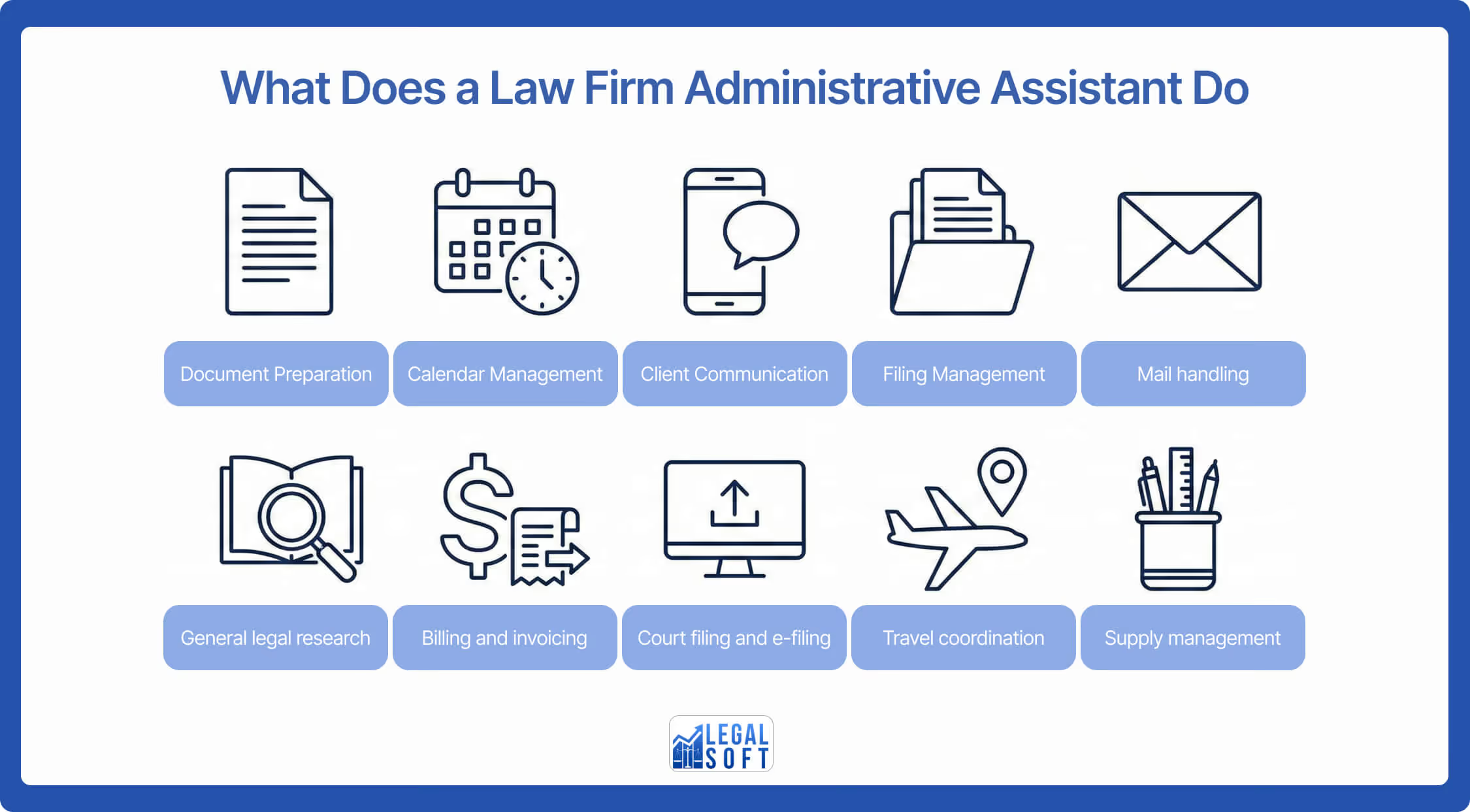
The scope of their duties primarily focuses on working with attorneys, paralegals, and outside vendors to support a law firm’s legal operations. But what specifically does a law firm administrative assistant do?
Typical law firm administrative assistants tasks include:
- Document preparation. Administrative assistants type, format, and proofread legal correspondence, contracts, and pleadings. They follow court rules and firm formatting guidelines to keep documents polished and ready for submission.
- Calendar and schedule management. Administrative assistants keep attorney schedules organized by coordinating meetings, booking client appointments, and tracking important deadlines. This includes managing court dates, depositions schedules, and internal firm meetings so nothing gets overlooked.
- Client communication and intake. From answering phone calls and responding to emails to greeting clients in person, administrative assistants are often the first point of contact for your firm. They handle these interactions professionally, direct urgent matters to the appropriate attorney, and help maintain positive client experiences.
- Filing management. Managing both physical and digital files keeps case materials organized. Administrative assistants open new client files, update existing records, and archive closed matters for easy reference and accessibility.
- Mail handling. Administrative assistants process incoming and outgoing mail, packages, and legal filings. This often includes tracking certified mail and court submissions to help firms stay compliant with deadlines and support timely delivery.
- General legal research. Administrative assistants may perform basic legal research, such as gathering information, preparing summaries, and assisting with drafting reports to support attorneys in case preparation.
- Billing and invoicing. Administrative assistants support firm finances by entering attorney time, preparing client invoices, and following up on outstanding balances. Some may also assist with basic accounts receivable tasks.
- Court filing and e-filing. This may include preparing documents for court submission and navigating electronic filing systems while following local court rules and deadlines to keep cases progressing.
- Travel and event coordination. Administrative assistants book travel, coordinate conference attendance, and organize firm events, including off-site depositions or client meetings, managing logistics so attorneys can focus on legal work.
- Office supply management. Administrative assistants help keep the workplace running smoothly by ordering supplies, managing vendors, and handling office equipment. They also coordinate maintenance and service contracts.
Daily Tasks of a Law Firm Administrative Assistant

A law firm administrative assistant's typical workday is spent on desks managing administrative workflows and involve regular active intervals coordinating various tasks throughout the day. They usually work in an office during standard business hours, though overtime may be required during busy periods.
The role is fast-paced, and no two days are exactly the same. An administrative assistant might spend the morning processing mail and returning client calls, the afternoon managing filings, and the end of the day organizing calendars for the following day. The specific rhythm depends heavily on the firm's size and practice areas.
How tasks vary by firm size
Legal Administrative Assistant vs. Paralegal: What's the Difference?
It is common to confuse these two roles, but they have different responsibilities within a law firm. Understanding the distinction helps you hire the right person and set appropriate expectations.
A legal administrative assistant focuses on clerical and operational support required to run a law office, but does not perform substantive legal work. No formal paralegal certification is required, although some employers may prefer candidates with prior legal experience.
According to the American Bar Association (ABA), a paralegal is a professional qualified by education, training, or work experience who performs substantive legal work under the direct supervision of a licensed attorney. Paralegals often hold certificates or degrees in the field, and some jurisdictions have specific educational requirements mandated by law.
Paralegals typically earn higher salaries than legal administrative assistants due to their specialized education, training, and the substantive legal work they perform.
Qualifications of a Law Firm Administrative Assistant
Education required
A four-year degree is generally not required for a law firm administrative assistant, though most firms require a high school diploma or equivalent as the minimum educational requirement. Candidates with associate degrees in legal studies, business administration, or office management often stand out.
Some community colleges and vocational schools offer legal secretary or legal administrative assistant certificate programs. These programs typically cover legal terminology, document formatting, court procedures, and legal ethics.
Essential skills required
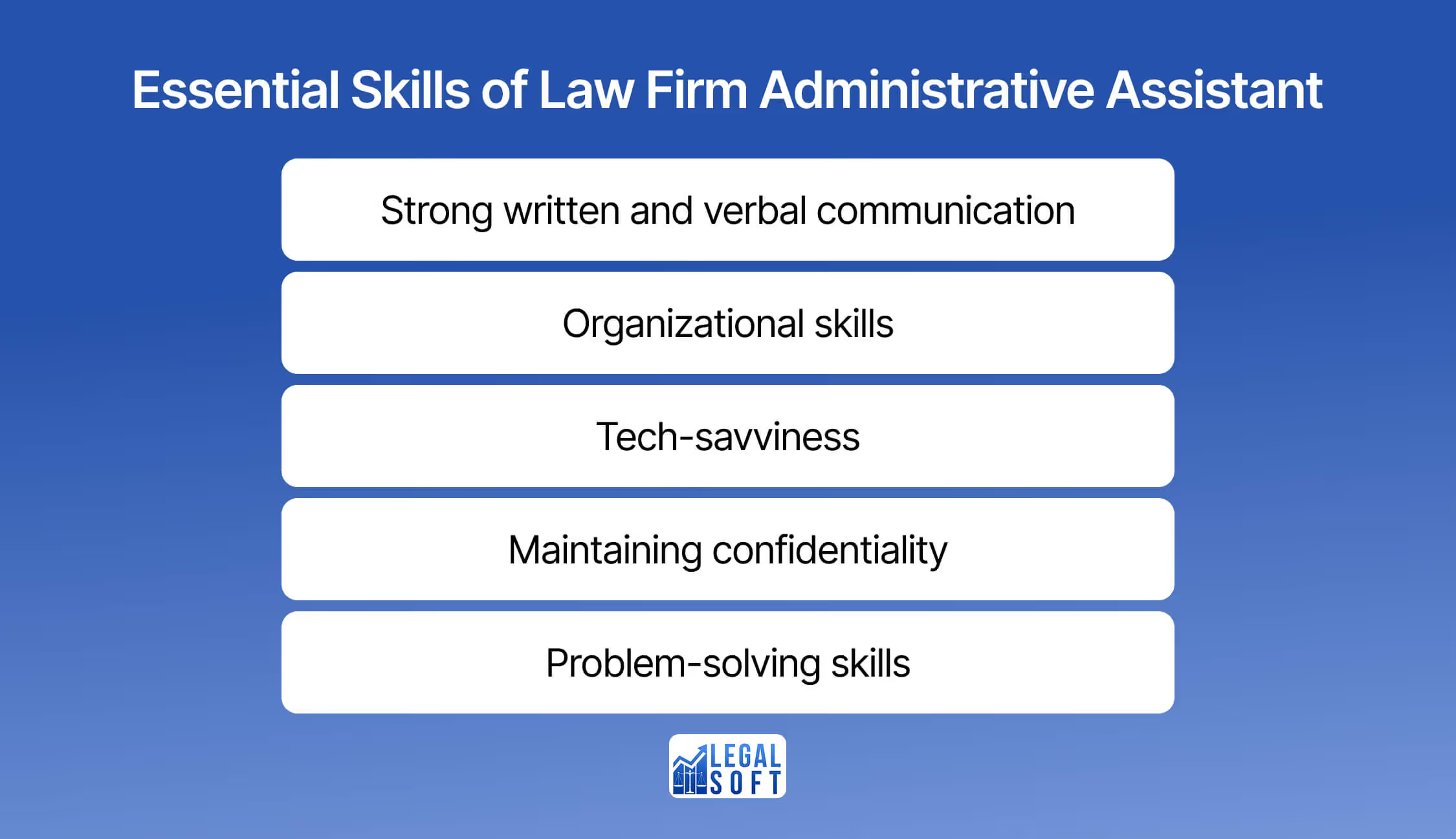
Beyond formal education and experience, law firms look for candidates with the specific skills required to succeed in this field:
- Strong written and verbal communication: Ability to write clear emails, prepare correspondence, and communicate effectively with clients and colleagues.
- Organizational skills: Must be able to juggle multiple responsibilities and manage day-to-day agendas that support office operations and workflow.
- Tech-savviness: Proficiency in Microsoft Office and law practice management software.
- Discretion: A strong understanding of attorney-client privilege and the importance of confidentiality.
- Problem-solving skills: Ability to respond to unexpected changes, handle urgent requests, and find solutions efficiently.
The demand for law firm administrative assistants remains positive, with job opportunities available nationwide. According to data from the U.S. Bureau of Labor Statistics, California employs the highest number of professionals in this role.
What is the Salary for a Law Firm Administrative Assistant?
The national average salary for a law firm administrative assistant is $54,769 per year, which is equivalent to about $20.35 per hour, according to Indeed. Salaries can vary based on factors such as location, experience, firm size, and practice area. For example, law firm administrative assistants working in metropolitan areas tend to earn higher salaries than those in suburban or rural areas due to the higher cost of living.
As a general guide from authoritative sources, here is a breakdown of salary ranges for law firm administrative assistants in 2026, based on work experience:
- Entry-level positions (0–2 years): $42,000 to $50,000 per year
- Mid-level professionals (3–5 years): $50,000 to $65,000 per year
- Senior administrative assistants (6+ years): $65,000 to $85,000 per year
Virtual Law Firm Administrative Assistants
You don’t necessarily need someone sitting in your office to handle administrative tasks. The rise of remote work is no longer just a trend, but has become a part of the legal industry. Thanks to advances in digital communication and technology, law firm administrative assistants can work remotely while providing the same quality of support you’ll achieve with in-house staff.
Virtual assistants can handle everything from answering calls to managing documents and offer benefits such as:
- Lower overhead costs by eliminating office space, equipment, salaries, and benefits of in-house staff
- Easy scalability to adjust support up or down based on caseload without hiring or layoffs
- Access to administrative assistants experienced and trained in legal workflows
- Flexible coverage to handle tasks and urgent matters outside normal hours
In-House vs. virtual: key considerations

Final Thoughts on the Role of Law Firm Administrative Assistants
A law firm administrative assistant is more than just a secretary. They are the operational backbone that allows attorneys to focus on practicing law. Whether you’re a solo practitioner drowning in paperwork or a law firm expanding its caseload, the right administrative support can transform your daily workflow.
Start by assessing how your time is spent each day. When looking for an administrative assistant, consider your firm’s size, budget, and work style. Their primary goal is to assist you with the tasks that are most challenging to handle on your own and to take on responsibilities you can confidently delegate.
Investing in administrative support is an investment in efficiency and profitability. At Legal Soft, we focus exclusively on providing law firms with experienced virtual legal professionals who understand the unique challenges of each legal practice and deliver the support they need.

Frequently Asked Questions
How do I know if my firm needs an administrative assistant?
Consider hiring an administrative assistant if you’re spending more time on non-billable tasks, missing deadlines or client communications, struggling to keep files organized, or turning away work because you’re at capacity. These are clear signs that you need administrative support.
What is the career progression for a legal administrative assistant?
You can advance into senior administrative or office manager roles. Some pursue paralegal education to transition into substantive legal work. With experience, many move into specialized legal support roles, such as litigation support or legal billing management.
How does a legal administrative assistant benefit a law firm?
They directly impact a firm’s profitability by allowing attorneys to focus on billable work instead of administrative tasks. They also improve the client experience through consistent communication and help maintain operational systems that prevent costly mistakes.
Can law firm administrative assistants work remotely?
Yes. Many administrative tasks can be performed remotely with the right technology. Virtual administrative assistants use cloud-based legal software and secure digital communication tools to support law firms from anywhere.